

Universal Pumping | High Pressure Pumps
High Pressure Pumps for Difficult to Pump Slurry, Sludge, and Food Waste.
The 2026 global pump market is becoming more demanding, especially where flooding, wastewater, and construction drainage overlap. A reliable water removal pump must move dirty water quickly, tolerate debris, and operate safely under pressure. Buyers now compare more than flow rate. They examine head height, solids handling, energy use, maintenance access, and local service support.
The United Nations World Water Development Report 2024 identifies water scarcity, climate pressure, and unequal infrastructure as continuing global challenges. The World Meteorological Organization’s State of the Global Climate reports also show growing exposure to extreme weather risks. These findings support stronger demand for portable drainage pumps, submersible sewage pumps, trash pumps, and high-head models. Each type serves a different field condition. A compact electric pump may suit basement flooding. A diesel trash pump may perform better on a remote construction site with muddy water and limited power.
Small details matter. A blocked intake can stop an otherwise powerful pump. A weak cable connection can create downtime. Poorly matched head pressure can reduce actual discharge far below the catalog figure. This is where technical experience becomes valuable. No single ranking is perfect. Buyers should verify test conditions, certification requirements, voltage compatibility, and replacement-part availability before purchasing.
This guide examines the top water removal pump types for global buyers in 2026. It connects published industry data with practical selection factors. The goal is not to promote the largest pump. It is to identify the most dependable choice for each water-removal challenge. Performance must remain measurable, serviceable, and realistic in the field.
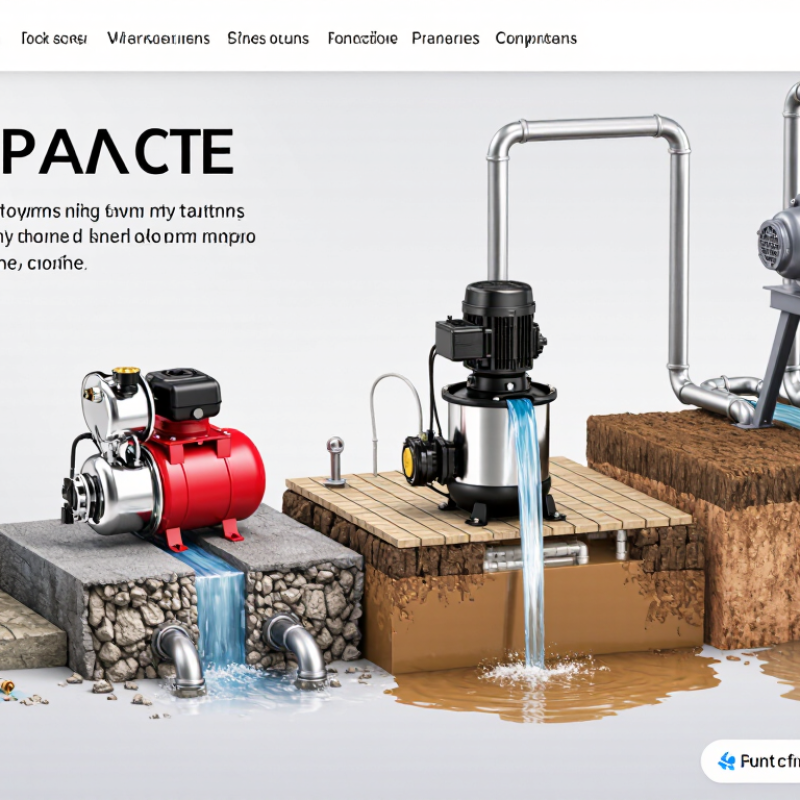
Water Removal Pumps: Definition, Purpose, and Basic Operating Principles
A water removal pump is equipment designed to move unwanted water from one location to another. It commonly serves flooded basements, construction areas, drainage pits, tanks, and low-lying rooms. Its purpose is simple: reduce standing water quickly and protect structures, equipment, and working surfaces. However, pump selection is rarely simple. Water depth, flow demand, discharge distance, debris, and available power all affect performance.
Most centrifugal pumps use a rotating impeller to create pressure. Water enters through the intake, gains velocity, and exits through the discharge pipe. Submersible models operate underwater and often include a screened inlet. Diaphragm pumps use repeated membrane movement and can handle air mixed with water. They usually provide lower flow but tolerate difficult suction conditions. Pump capacity must be checked against total head, including vertical lift and pipe resistance. A high flow rating alone can mislead buyers.
Tips: Measure the water depth and discharge height before purchasing. Check the inlet screen, cable, seals, and hose connections regularly. Never run a pump dry unless its instructions allow it. In real sites, dirt blocks screens faster than expected. Specifications may also look precise but perform differently with long hoses or muddy water. Test the setup under realistic conditions, and leave room for that imperfect result.
| Water Removal Pump Type | Definition and Basic Operating Principle | Typical Water or Fluid Conditions | Typical Flow Range | Typical Total Head | Solids-Handling Capability | Main Advantages | Common Limitations | Typical Applications | Key Buying Considerations |
|---|---|---|---|---|---|---|---|---|---|
| Submersible Drainage Pump | An electric centrifugal pump designed to operate while fully or partly submerged. The impeller converts motor energy into liquid velocity, and the volute converts velocity into pressure. | Clean water, rainwater, groundwater, seepage water, and lightly contaminated water. | Approximately 5–200 m³/h | Approximately 5–60 m | Usually limited to small soft particles; commonly about 5–12 mm, depending on impeller design. | Compact installation, quiet operation, no priming line, and effective removal from pits or low-level areas. | Requires suitable electrical protection; seals and motor insulation can be damaged by unsuitable liquids or dry running. | Basements, construction dewatering, drainage pits, rainwater collection, and emergency flood removal. | Check rated submergence, cable protection, motor insulation, float-switch design, discharge diameter, and dry-run protection. |
| Sewage and Solids-Handling Pump | A centrifugal pump with a passage or impeller configuration designed to move wastewater containing suspended solids without frequent blockage. | Domestic sewage, wastewater, greywater, and liquids containing fibrous or suspended materials. | Approximately 10–300 m³/h | Approximately 5–50 m | Typically handles suspended solids from about 25–100 mm, depending on the free-passage design. | Large flow passages, robust construction, and reduced blockage risk compared with standard drainage pumps. | Less suitable for abrasive sand, long fibrous materials, or highly pressurized systems unless specifically designed for them. | Sewage lift stations, wastewater sumps, municipal drainage, and commercial buildings. | Confirm required free passage, wastewater temperature, pump duty point, check-valve arrangement, and lifting-chain access. |
| Cutter or Grinder Pump | A pump fitted with a cutting mechanism that macerates selected solids before the liquid enters a relatively small discharge pipe. | Domestic or commercial wastewater containing wipes, textiles, and other grindable solids. | Approximately 2–80 m³/h | Approximately 20–120 m | Cuts many soft or fibrous solids into smaller particles; it is not intended for stones, metal, or heavy abrasive debris. | Can operate through long or narrow force mains and helps reduce clogging in small-diameter discharge systems. | Cutting components wear with abrasive materials; higher energy use and maintenance complexity than ordinary sewage pumps. | Pressure sewer systems, remote buildings, small-diameter wastewater force mains, and difficult elevation changes. | Evaluate cutting torque, material hardness, service access, required discharge pressure, and compatibility with the local sewer system. |
| Self-Priming Centrifugal Pump | A surface-mounted centrifugal pump with a casing arrangement that removes air from the suction line and re-establishes liquid flow after filling. | Clean to moderately dirty water, process water, and liquids with limited entrained air. | Approximately 10–500 m³/h | Approximately 10–90 m | Usually handles small suspended particles; actual capability depends on the impeller and casing passage. | Easy access for maintenance, suitable for above-ground installation, and useful where the pump may need to restart automatically. | Requires correct suction-pipe layout; practical suction lift is limited by atmospheric pressure, temperature, altitude, and friction losses. | Construction dewatering, irrigation transfer, tank emptying, and industrial drainage. | Check maximum suction lift, priming time, foot-valve requirements, casing drain, suction hose strength, and NPSH conditions. |
| End-Suction Centrifugal Pump | A common horizontal centrifugal pump with an axial suction inlet and a radial discharge outlet. It is normally installed with a flooded suction or a separate priming arrangement. | Clean water and low-viscosity liquids with limited solids. | Approximately 5–1,000 m³/h | Approximately 10–150 m | Generally limited to small particles unless fitted with a special semi-open impeller. | Wide availability, straightforward maintenance, good efficiency near the design point, and broad size selection. | Usually cannot reliably lift air-filled suction lines without priming equipment; blockage can occur with debris. | Water transfer, dewatering systems, irrigation, cooling-water circulation, and general utility service. | Match the pump curve to the duty point, verify NPSH available, select the correct seal material, and account for pipe friction. |
| Diaphragm Pump | A positive-displacement pump that uses reciprocating diaphragms to alternately fill and discharge chambers through check valves. | Dirty water, sludge, mud, chemically active liquids, and fluids containing air. | Approximately 0.5–100 m³/h | Approximately 10–80 m | Can handle solids and abrasive particles, subject to diaphragm, valve, and passage design. | Strong self-priming ability, can run dry for selected designs, and handles air entrainment better than many centrifugal pumps. | Pulsating flow, lower flow rate for a given size, diaphragm wear, and possible need for pulsation dampening. | Mud removal, sludge transfer, emergency dewatering, chemical drainage, and remote sites without reliable electricity. | Choose air-operated or motor-driven construction, verify chemical compatibility, inspect diaphragm life, and size the air supply or motor correctly. |
| Air-Operated Double-Diaphragm Pump | A pneumatic positive-displacement pump powered by compressed air. Air shifts the diaphragms while check valves control suction and discharge. | Dirty water, sludge, slurry, flammable-area drainage, and liquids with variable viscosity. | Approximately 0.1–60 m³/h | Approximately 5–80 m | Often handles relatively large solids for its size, depending on valve type and wetted-passage dimensions. | Air-powered operation can be suitable in wet or hazardous areas; strong self-priming and dry-run tolerance are common features. | Compressed-air consumption can be high; discharge flow pulsates and operating noise may require control measures. | Mines, chemical plants, shipyards, contaminated sites, and locations where electrical equipment is restricted. | Check air pressure and volume, exhaust arrangement, wetted materials, maximum solid size, and required flow-control method. |
| Progressive Cavity Pump | A positive-displacement pump in which a rotating helical rotor moves through an elastomeric stator, creating progressing sealed cavities that transport liquid. | Sludge, slurry, high-solids water, viscous liquids, and shear-sensitive mixtures. | Approximately 0.1–250 m³/h | Approximately 10–100 m | Handles suspended solids and fibrous material when the inlet and rotor-stator geometry are correctly selected. | Low-pulsation flow, accurate metering, and effective handling of viscous or solids-rich liquids. | Must not run dry because the stator can overheat rapidly; abrasive solids and incorrect speed can shorten stator life. | Sludge dewatering, wastewater treatment, industrial slurry transfer, and thickened-liquid handling. | Assess dry-run protection, stator elastomer compatibility, solids concentration, rotor speed, inlet flooding, and maintenance access. |
| Vortex Impeller Pump | A centrifugal pump using a recessed or vortex impeller. The rotating impeller creates a fluid vortex, allowing many solids to pass with limited contact. | Wastewater, stormwater, sewage, and liquids containing fibrous or suspended solids. | Approximately 5–250 m³/h | Approximately 5–70 m | Often provides a relatively large free passage, commonly about 25–100 mm depending on pump size. | Lower direct contact between solids and impeller, good blockage resistance, and suitability for variable wastewater quality. | Efficiency may be lower than a closed-impeller pump at the same duty point; not ideal for very high head requirements. | Stormwater stations, sewage sumps, industrial wastewater, and floodwater containing debris. | Compare free passage, hydraulic efficiency, vortex chamber design, motor overload margin, and solids characteristics. |
| Axial-Flow or Mixed-Flow Pump | A high-volume centrifugal pump that moves liquid mainly parallel to the shaft in axial-flow designs, or partly radial and partly axial in mixed-flow designs. | Relatively clean or lightly screened water with low viscosity. | Approximately 500–20,000+ m³/h | Approximately 2–25 m | Usually requires screened or controlled solids content to prevent impeller damage and blockage. | Very high flow capacity and efficient movement of water through low-head drainage systems. | Unsuitable for high pressure or large unscreened debris; operation away from the design point can reduce efficiency. | Flood-control stations, irrigation drainage, stormwater channels, and low-lift water transfer. | Prioritize flow accuracy, intake hydraulics, trash-screen design, submergence, variable-speed control, and low-head system losses. |
| Trash Pump | A rugged centrifugal pump with a large internal passage and semi-open or open impeller for moving water containing leaves, stones, sludge, and construction debris. | Construction runoff, muddy water, stormwater, and debris-containing surface water. | Approximately 20–1,500 m³/h | Approximately 10–80 m | Often handles solids from about 25–100 mm, depending on the pump design and discharge size. | High solids tolerance, quick access for unclogging, and suitability for demanding temporary dewatering work. | Usually larger and less efficient than clean-water pumps; fuel-engine versions require ventilation and exhaust management. | Construction sites, quarries, flood response, agriculture, and emergency drainage. | Verify solid size, pump self-priming behavior, hose collapse resistance, wear-plate material, fuel consumption, and service access. |
| Vacuum-Assisted Dewatering Pump | A centrifugal or positive-displacement pump combined with a vacuum system that removes air from the suction line and supports automatic priming. | Water mixed with air, deep excavations, wellpoint systems, and applications with changing water levels. | Approximately 20–2,000 m³/h | Approximately 10–100 m | Depends on the main pump; screened or moderately dirty water is commonly preferred. | Fast automatic priming, reliable operation with air leakage, and suitability for continuous dewatering installations. | More complex, heavier, and typically more expensive than a basic centrifugal pump; vacuum-system maintenance is required. | Wellpoint dewatering, excavation drainage, tunnel construction, and large civil-engineering projects. | Assess air-handling capacity, vacuum lift, priming speed, duty-cycle requirements, fuel or electrical supply, and noise limits. |
| Utility Transfer Pump | A lightweight portable centrifugal or positive-displacement pump intended for moving relatively clean water between tanks, pools, containers, or low-level areas. | Clean water, rainwater, pool water, and low-sediment utility water. | Approximately 2–80 m³/h | Approximately 5–40 m | Usually limited to very small particles; a strainer is often required. | Portable, simple to operate, economical for intermittent transfer, and available with electric or engine drive. | Not designed for heavy sludge, large debris, continuous harsh-duty operation, or high-temperature liquids. | Residential drainage, garden irrigation, tank transfer, pool maintenance, and light maintenance work. | Check portability, power supply, inlet strainer, maximum lift, hose compatibility, noise, and intended duty cycle. |

Universal Pumping
625 Apache Trail
Woodstock, GA 30189
Mon - Fri | 9:00 AM - 5:00 PM
Universal Pumping is staffed with industry professionals with 20-45 years experience with high pressure pumping systems. We represent only the “elite producers” in pump manufacturing: Britain’s EMS and Germany’s EMMERICH. Our engineering and manufacturing approach is conservative, and we do not use “guess work” in the design or sales of our pumping and filtration equipment.


