Why Choose a Food Transfer Pump for Your Business Needs?
In the fast-paced world of food production and distribution, efficiency is key. A food transfer pump can significantly simplify the transfer of liquids in various processes. Industry expert Susan Wright, a renowned food processing engineer, states, "Choosing the right pump can make or break your operational efficiency." Her insight highlights the importance of selecting a reliable tool for your business.
When transporting food products, hygiene and safety cannot be compromised. Food transfer pumps are designed with these factors in mind. They minimize contamination risks during transport, ensuring product quality. A high-quality pump can handle various viscosities, making it versatile.
However, not all food transfer pumps are equal. Some businesses may overlook essential features, leading to inefficiencies or failures. It's crucial to assess your specific needs before making a choice. Think ahead. Investing in a reliable food transfer pump saves you time and resources in the long run. Consider both immediate needs and long-term benefits.
Benefits of Using Food Transfer Pumps in the Food Industry
The food industry faces unique challenges. Food transfer pumps play a crucial role in addressing these issues. They are designed to handle various food products, including liquids and semi-solids. According to a report by Research and Markets, the global food pump market is expected to grow by 5% annually, showing increased adoption of these essential tools.
Using food transfer pumps can enhance efficiency. They reduce the risk of contamination by ensuring a safe transfer process. For instance, proper sealing in these pumps minimizes exposure to external elements. This quality is vital in maintaining food safety and adhering to health regulations. Studies indicate that effective food handling contributes to reducing waste by up to 20%.
Tips: Always consider the pump's materials and design. Stainless steel options are preferable for durability and hygiene. Regular maintenance is necessary to prevent failures. Remember, choosing the right pump can lead to significant cost savings.
The benefits extend beyond efficiency. Food transfer pumps allow for precise measurements. This accuracy is vital for recipe adherence and inventory management. However, not all pumps are created equal. Assessing individual business needs is essential for making the best choice. Ensuring compatibility with different food types is also important.
Key Features of Food Transfer Pumps for Optimal Performance
When considering food transfer pumps, it's essential to focus on key features that enhance performance. These pumps are designed to handle various food products, from liquids to semi-solids. A robust pump can reduce product waste, ensuring your business operates efficiently.
Durability is another crucial aspect. Pumps made from food-grade materials resist wear and corrosion, leading to a longer service life.
Another important feature is the ease of cleaning. In food processing, hygiene is vital. Pumps that allow for thorough cleaning minimize contamination risks. Effective seals and smooth surfaces aid in the cleaning process. This prevents buildup and keeps your products safe. Additionally, flow rates should be adjustable. This flexibility accommodates different recipes or production needs without hindering efficiency.
It's also worth considering the energy efficiency of pumps. An energy-saving model can cut operational costs. Yet, it’s important to weigh initial investment against long-term savings. Not all pumps provide the same level of efficiency. Assessing the reliability of the pump’s performance can sometimes be overlooked. Proper maintenance is needed to keep them functioning optimally, which may require regular checks. Even with top-tier equipment, businesses can face challenges ensuring consistent operation.
Industry Standards and Regulations for Food Transfer Pumps
Food transfer pumps are essential in the food industry. They ensure safe and efficient movement of liquids. Compliance with industry standards is critical. These standards include the FDA regulations and those set by the USDA. Manufacturers of food transfer pumps must meet specific performance criteria. This ensures the quality and safety of food products.
Data from industry reports indicates that nearly 80% of food safety issues stem from improper handling of liquids. This underscores the need for reliable equipment. Food transfer pumps must be constructed from materials that are food-safe. Stainless steel is often preferred due to its durability and resistance to corrosion. They should also have a design that minimizes contamination risks.
Furthermore, regular maintenance of pumps is important. Neglecting this can lead to inefficiencies or even equipment failure. Some pumps may not meet the latest hygiene standards. This can pose a risk to food safety. Businesses must invest in certified equipment to mitigate these risks. Making informed decisions is crucial for maintaining compliance and ensuring product quality in the food industry.
Why Choose a Food Transfer Pump for Your Business Needs? - Industry Standards and Regulations for Food Transfer Pumps
| Specification |
Description |
Industry Standard |
Compliance Requirements |
| Flow Rate |
Measurement of the amount of fluid that can be transferred in a given time |
ISO 2859-1 |
Must meet minimum flow rate criteria based on application |
| Material |
Construction materials that ensure safety and hygiene |
FDA 21 CFR |
Materials must be food safe and resistant to corrosion |
| Hygiene Level |
Standards regarding cleanliness and prevention of contamination |
EHEDG Guidelines |
Equipment must comply with hygienic design standards |
| Power Supply |
Energy source required for operation |
CE Marking |
Electrical safety standards must be adhered to |
| Maintenance Requirements |
Frequency and types of service needed for optimal performance |
ISO 9001 |
Regular maintenance logs must be kept for compliance |
Comparative Analysis: Manual vs. Automated Food Transfer Pumps
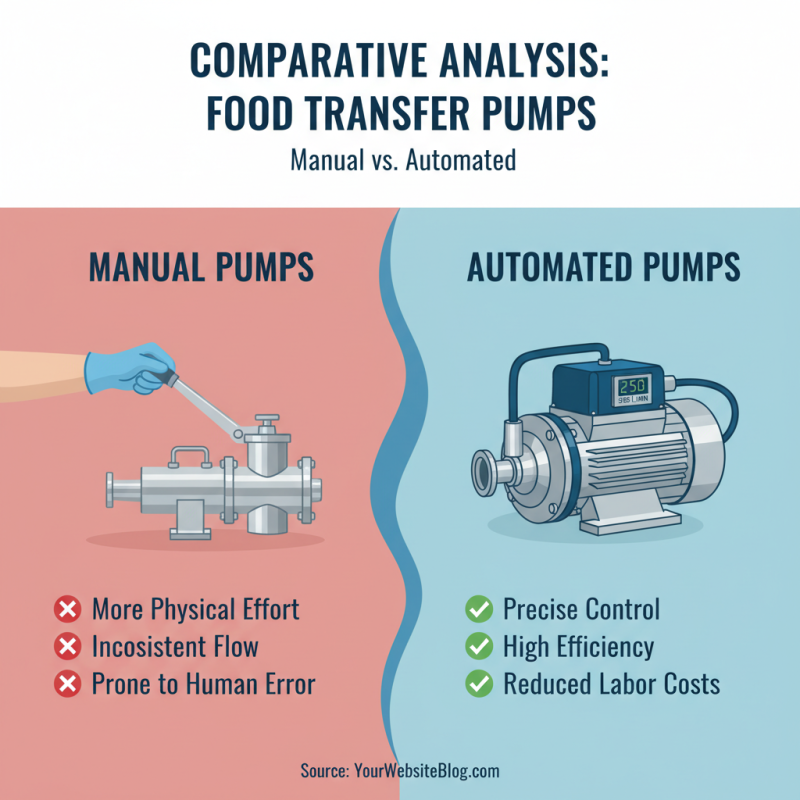
When selecting a food transfer pump, consider whether a manual or automated option suits your needs. Manual pumps require more physical effort and might lead to inconsistencies in flow rate. They can be less reliable and more prone to human error. On the other hand, automated pumps offer precise control and efficiency. They reduce labor costs and can handle larger volumes of food products.
The choice depends on factors like production scale and budget. Automated pumps can save time and reduce waste during transfers. However, they may require more maintenance and technical support. Manual pumps, while simpler, demand more attention and skill from operators, which can slow down processes.
Tips: Regularly inspect your pump to ensure it functions well. Train your staff properly to maintain operational efficiency. Think about your unique production processes before making a decision. Each option has its strengths and weaknesses. Recognizing these can guide you toward a decision that aligns with your business's specific needs.
Cost-Benefit Analysis of Investing in Food Transfer Technology
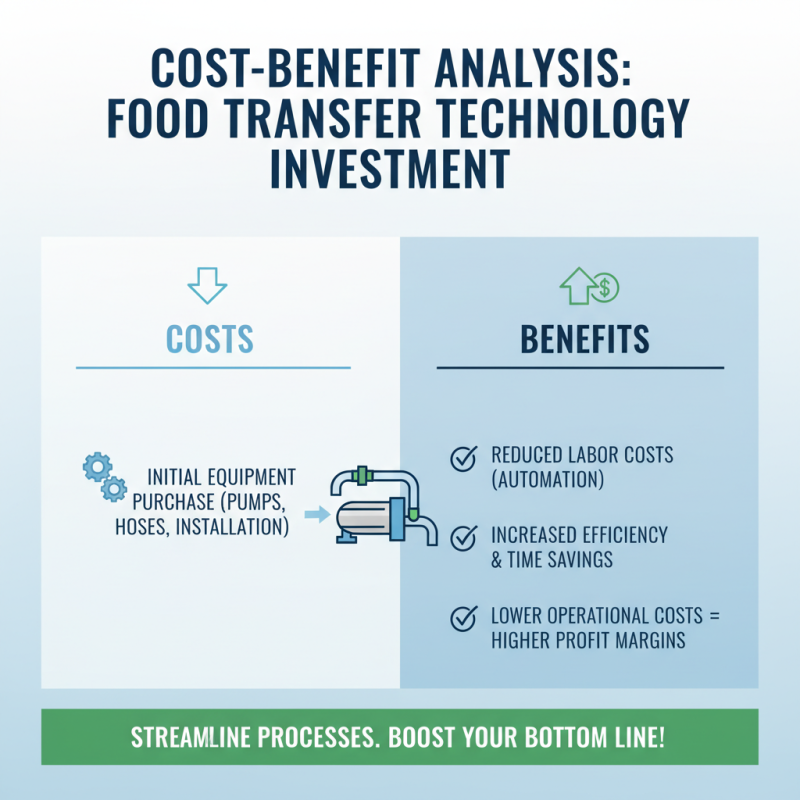
Investing in food transfer technology can significantly impact your bottom line. Food transfer pumps streamline processes and reduce manual labor. They save time and improve efficiency, which is crucial for any food business. Lower operational costs can lead to higher profit margins.
However, it’s essential to weigh the initial investment against potential savings. While pumps are not cheap, they reduce waste and minimize errors. A well-functioning pump can prevent spillages and ensure accurate transfers. This reliability can enhance your brand’s reputation.
On the flip side, improper use can lead to costly issues. Regular maintenance is necessary, and staff training is crucial. Businesses may struggle initially to justify the expense. Monitoring and adapting to your specific needs is key. The right approach can yield long-term benefits.