

Universal Pumping | High Pressure Pumps
High Pressure Pumps for Difficult to Pump Slurry, Sludge, and Food Waste.
Choosing high pressure pumps for global use requires more than comparing pressure ratings and catalog prices. The right model must match the complete operating system, including flow demand, fluid temperature, viscosity, solids, suction conditions, and daily duty cycles. A pump designed for clean water may struggle with abrasive process fluid. Small differences matter.
Dr. Lev Nelik, a recognized pump-system specialist and author, has emphasized, “The pump is only one part of the system.” That principle should guide every international selection. A pump may perform well in a factory test, yet fail after installation because of poor piping, unstable voltage, inadequate filtration, or incorrect NPSH assumptions. Field experience teaches humility. Specifications are not always the whole story.
Global projects add further complications. Engineers must check local electrical standards, motor frequencies, connection types, pressure units, materials compatibility, and available service skills. Stainless steel may suit one fluid, but not every chemical or temperature range. Seal selection deserves equal attention. So does spare-parts availability.
A reliable evaluation begins with the real duty point, not the maximum pressure printed in a brochure. Confirm flow at pressure, efficiency, noise, startup behavior, and expected maintenance intervals. Consider altitude and climate. A pump operating in a humid coastal plant faces different risks from one installed in a dry, high-altitude facility.
There is no universal pump.
The best choice balances performance, safety, lifecycle cost, documentation, and local support. It may also require revisiting the original specification. That is not weakness. It is sound engineering.
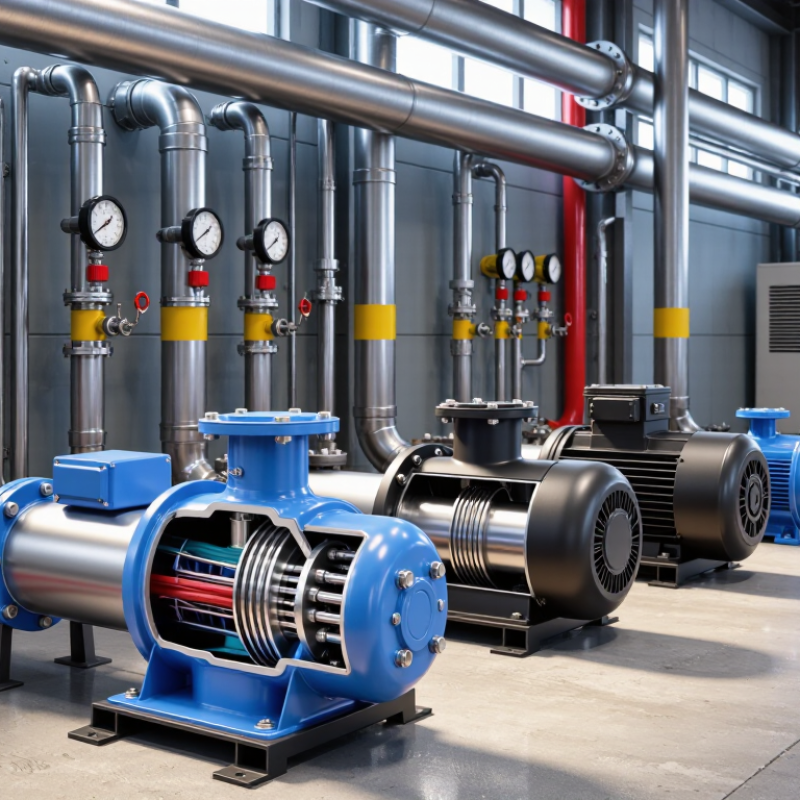
Choosing a high pressure pump for global use starts with precise pressure, flow, and application requirements. Pressure means the force needed at the pump outlet, not the maximum rating printed on a specification sheet. Measure inlet pressure, discharge pressure, pipe elevation, friction loss, and required pressure at the equipment. The difference between these values defines the real duty point.
Flow must match the process. Estimate the required litres per minute during normal operation, then check startup demand and acceptable fluctuation. A pump running far below its design flow may overheat or wear unevenly. Too much flow can damage filters, seals, or downstream instruments. Use actual measurements when possible. A first estimate is often wrong.
Application details decide whether the pump survives outside the test room. Record fluid temperature, viscosity, acidity, particles, and whether the liquid changes during operation. Consider continuous or intermittent use, ambient temperature, altitude, local power supply, and available maintenance skills. Materials should resist the fluid and the local environment. A pressure gauge, relief device, and suitable filtration can improve control and safety. Do not ignore noise or vibration; operators notice them before a failure report appears. My field experience suggests that simple requirements sheets prevent costly selection errors, although they rarely capture every real-world condition. Leave room for testing under actual site conditions.
Use the operating pressure, required flow, fluid characteristics, duty cycle, and local electrical conditions as the primary inputs for pump selection. The ranges below are typical engineering reference values and should be verified against the actual system design.
| Application | Typical Fluid | Typical Flow Rate | Typical Operating Pressure | Recommended Pump Configuration | Common Wetted Materials | Key Selection Requirements |
|---|---|---|---|---|---|---|
| Industrial Cleaning | Fresh water, treated water, mildly alkaline cleaning solutions | 10–100 L/min (2.6–26.4 US gal/min) |
100–300 bar (1,450–4,350 psi) |
Triplex or multi-plunger positive-displacement pump | Stainless steel or nickel-plated alloy for wetted parts; ceramic or tungsten-carbide plungers | Confirm nozzle flow, inlet filtration, chemical compatibility, duty cycle, and allowable pulsation |
| Seawater Reverse Osmosis Feed | Filtered seawater or brackish water | 20–250 L/min (5.3–66.0 US gal/min) |
40–70 bar (580–1,015 psi) |
High-pressure plunger pump or energy-efficient rotary positive-displacement pump | Duplex or super-duplex stainless steel, titanium, or other seawater-compatible alloys | Account for salinity, chloride corrosion, membrane recovery, feed-water temperature, and pretreatment quality |
| High-Pressure Water Mist | Clean, filtered water | 5–50 L/min (1.3–13.2 US gal/min) |
70–140 bar (1,015–2,030 psi) |
Compact multi-plunger pump with low-pulsation operation | Stainless steel wetted parts; elastomers selected for water temperature and treatment chemicals | Use the nozzle manufacturer's flow and pressure requirements; provide fine filtration and reliable pressure control |
| Hydrostatic Pressure Testing | Clean water, glycol-water mixtures, or approved test fluids | 1–30 L/min (0.26–7.9 US gal/min) |
100–700 bar (1,450–10,150 psi) |
Positive-displacement test pump with manual or automatic pressure regulation | Stainless steel or hardened alloy components compatible with the test fluid | Specify test pressure, hold time, pressure stability, relief-valve setting, and calibrated pressure measurement |
| Boiler or Thermal-Process Feed | Demineralized water, condensate, or treated feedwater | 50–500 L/min (13.2–132.1 US gal/min) |
40–160 bar (580–2,320 psi) |
Multistage centrifugal pump or high-pressure plunger pump | Stainless steel or suitable alloy selected for temperature and dissolved-oxygen conditions | Check water temperature, net positive suction head, minimum-flow protection, steam-cycle demand, and continuous-duty rating |
| Process Chemical Injection | Water treatment chemicals, corrosion inhibitors, solvents, or process additives | 0.1–20 L/min (0.026–5.3 US gal/min) |
100–1,000 bar (1,450–14,500 psi) |
Metering diaphragm, plunger metering, or precision positive-displacement pump | Material must be selected for the chemical; possible options include PTFE, PVDF, ceramic, Hastelloy-type alloys, or stainless steel | Define chemical concentration, viscosity, temperature, dosing accuracy, leak containment, and compatibility of seals and valves |
| Hydraulic Power and Actuation | Mineral hydraulic oil, water-glycol fluid, or fire-resistant hydraulic fluid | 5–200 L/min (1.3–52.8 US gal/min) |
100–350 bar (1,450–5,075 psi) |
Axial-piston, radial-piston, or other hydraulic positive-displacement pump | Steel, cast iron, stainless steel, and seal materials matched to the hydraulic fluid | Match displacement and speed to actuator demand; check viscosity, contamination level, pressure spikes, and control method |
| Pipeline and Equipment Flushing | Water, filtered process fluid, or approved cleaning fluid | 50–1,000 L/min (13.2–264.2 US gal/min) |
20–100 bar (290–1,450 psi) |
High-flow centrifugal pump or large positive-displacement pump | Carbon steel, stainless steel, or alloy materials based on fluid chemistry | Prioritize required flushing velocity, pipe diameter, pressure loss, solids tolerance, and continuous operating time |
| Parameter | What to Define | Practical Selection Guidance |
|---|---|---|
| Pressure | Required discharge pressure, pressure losses, elevation difference, and transient pressure | Specify normal operating pressure and maximum system pressure separately. The pump and all connected components must be rated above the maximum possible pressure. |
| Flow | Required minimum, normal, and maximum flow rate | Size the pump for the actual process demand rather than selecting only by maximum pressure. Flow is commonly stated in L/min, m³/h, or US gal/min. |
| Fluid | Composition, viscosity, temperature, density, solids, gas content, and corrosiveness | Check wetted materials, valves, plungers, diaphragms, coatings, and elastomers against the complete fluid specification. |
| Duty Cycle | Intermittent or continuous operation, start-stop frequency, and annual operating hours | Continuous-duty systems require appropriate cooling, lubrication, bearing life, seal life, and minimum-flow protection. |
| Inlet Conditions | Available inlet pressure, suction lift, fluid temperature, pipe length, and inlet filtration | Verify net positive suction head available against net positive suction head required to reduce cavitation risk and unstable operation. |
| Global Installation | Voltage, frequency, motor efficiency rules, ambient temperature, altitude, enclosure rating, and local certification | Confirm the motor and control panel configuration for the installation country. Typical low-voltage power systems use 50 or 60 Hz, but the exact voltage and wiring arrangement must be confirmed locally. |
| Control and Protection | Pressure regulation, flow control, bypass operation, relief protection, dry-run protection, and emergency shutdown | Use a correctly sized relief valve, pressure gauge or transducer, inlet strainer, and control logic suitable for the pump type and process risk. |




Universal Pumping
625 Apache Trail
Woodstock, GA 30189
Mon - Fri | 9:00 AM - 5:00 PM
Universal Pumping is staffed with industry professionals with 20-45 years experience with high pressure pumping systems. We represent only the “elite producers” in pump manufacturing: Britain’s EMS and Germany’s EMMERICH. Our engineering and manufacturing approach is conservative, and we do not use “guess work” in the design or sales of our pumping and filtration equipment.


