What is a Concrete Batching Plant and How Does it Work?
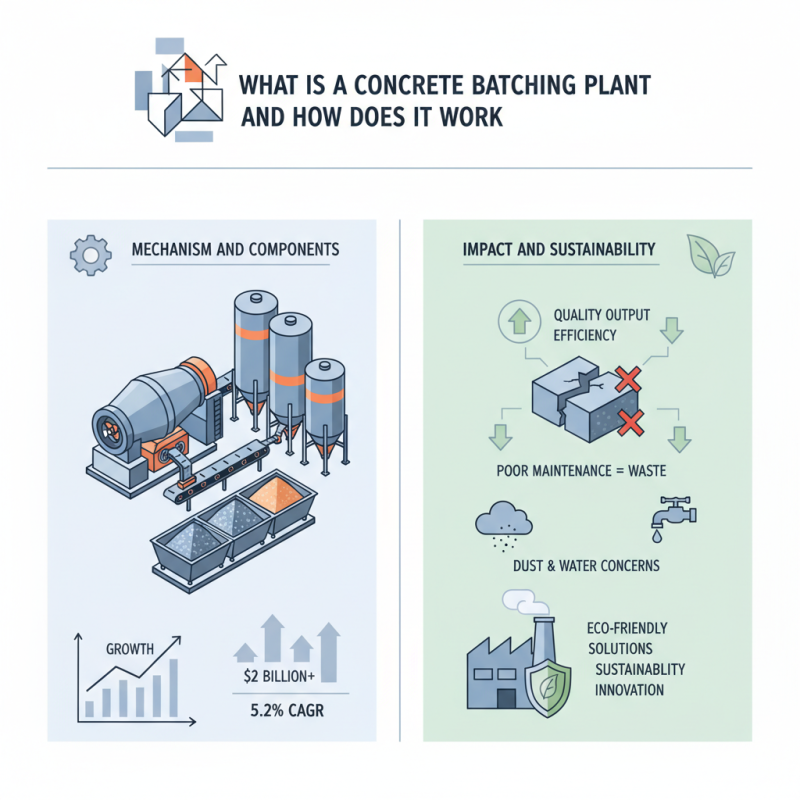
Concrete Batching Plants play a crucial role in modern construction. They are the backbone of concrete production, essential for high-quality output. According to industry reports, the global concrete batching plant market was valued at over $2 billion in 2022, with a forecasted compound annual growth rate of 5.2% through 2030. This indicates a growing reliance on these plants for efficient construction processes.
A Concrete Batching Plant consists of various components, including mixers, silos, and aggregate bins. These elements work together to produce concrete consistently. The precision of batching ensures that the concrete meets specific strength and durability requirements. However, not all plants operate at optimal efficiency. Factors such as material quality and plant maintenance significantly impact their performance. A poorly maintained plant can lead to variable concrete quality and increased waste.
In addition to operational challenges, the environmental impact of Concrete Batching Plants cannot be overlooked. Dust emissions and water usage are critical concerns in the industry. Many companies are now seeking innovative solutions to enhance sustainability. Striking a balance between productivity and eco-friendliness remains a pressing challenge. The evolution of Concrete Batching Plants will be vital in addressing these issues while supporting construction demands.
What is a Concrete Batching Plant?
A concrete batching plant is a facility that blends various ingredients to produce concrete. It uses different proportions of cement, water, sand, and aggregates to create a consistent mix. The plant ensures that projects receive high-quality concrete, essential for structural integrity. According to industry reports, around 70% of a construction project's success depends on the quality of its concrete.
These plants come in two main types: stationary and mobile. Stationary plants are fixed in one location, while mobile plants can be transported. Different types serve various project needs. For instance, smaller projects might benefit from mobile plants while large developments may require stationary ones. These plants can produce a significant volume of concrete, contributing to efficiency in construction timelines.
Tip: Regular maintenance of batching equipment can enhance performance and lifespan. Checking for wear and tear can prevent costly disruptions.
Another crucial aspect is automation. Modern concrete batching plants feature software that monitors mixes for accuracy. This automation minimizes human error. However, reliance on technology can also introduce challenges, such as software failures. Addressing these issues requires skilled personnel and consistent training to ensure smooth operations.
Tip: Always train staff on both equipment and software for better productivity and safety.
Concrete batching plants are pivotal in the construction industry, demanding careful attention to operation and maintenance for optimal output.
Key Components of a Concrete Batching Plant
A concrete batching plant is essential in construction. It mixes cement, water, and aggregates to create concrete. Understanding its key components is vital for optimal performance.
The main components include mixers, silos, and conveyors.
Mixers blend materials to form concrete. There are different types such as drum and twin-shaft mixers. Silos store cement and fly ash, keeping them dry. These materials are crucial for a quality mix. Conveyors transport aggregates from storage to the mixer, ensuring efficiency.
Tips: Regular maintenance of mixers is important. Check for wear and tear on blades. Also, calibrate scales frequently to ensure accuracy in measurements. This helps prevent inconsistencies in concrete quality.
Automation in batching plants enhances precision. However, it may lead to over-reliance on technology. Operators should still understand the mixing process. Manual checks can catch errors that machines might miss. Balancing technology and human oversight is important.
The Process of Concrete Mixing in Batching Plants
Concrete batching plants are essential for producing concrete for construction projects. The process of concrete mixing involves several precise steps to ensure the right consistency and quality. Operators first select and measure raw materials. This includes cement, aggregates, water, and sometimes additives. Accurate measurement is critical; too much or too little material can compromise strength.
Once the materials are ready, they are fed into a mixer. The mixer blends them thoroughly to achieve a uniform mixture. This stage is crucial. If mixing is incomplete, it can lead to weak spots in the concrete. Many plants use automated systems for efficiency, but human oversight remains important. Operators must regularly check the mixture's consistency.
After mixing, the concrete is either stored in silos or transported directly to site. Timing is vital, as concrete starts to set rapidly. If delays occur, the quality may diminish. Thus, scheduling is an essential consideration for batching plant operation. It's easy to overlook the significance of these processes, but each step affects the final product. Understanding this can reveal areas for improvement in efficiency and quality control.
Concrete Batching Plant Data
| Component | Description | Function |
| Aggregate Bins | Containers for storing various sizes of aggregates like sand, gravel, and crushed stone. | To hold raw materials before mixing. |
| Mixer | A machine that combines the aggregates, cement, water, and additives to produce concrete. | To ensure uniform mixing of all components. |
| Cement Silo | A large storage container for cement, usually equipped with a discharging system. | To store and dispense cement required for mixing. |
| Water and Additive Storage | Tanks that hold water and chemical additives for the concrete mix. | To provide necessary liquids for cement hydration and modify the properties of concrete. |
| Control System | An electronic system that controls the batching process and monitors all equipment. | To automate and ensure precise control of the batching process. |
Types of Concrete Batching Plants and Their Uses
Concrete batching plants are essential in the construction industry. They are designed to combine ingredients to create concrete. Each type of plant serves different purposes based on project needs. There are two primary types: station-based and mobile batching plants.
Station-based plants are stationary and suitable for large projects, like highways or skyscrapers. They have a high production capacity that can exceed 200 cubic meters of concrete per hour.
[Image]
Mobile batching plants, on the other hand, offer flexibility. They can be transported to various sites, making them ideal for smaller projects or remote locations. Despite their mobility, they can produce around 30 to 150 cubic meters per hour. According to industry reports, mobile concrete plants have seen a 15% increase in usage over the past five years, demonstrating their growing popularity.
Selecting the right batching plant impacts project efficiency and concrete quality. It’s crucial to consider factors such as site location and project volume. However, not all plants deliver consistent quality. Some users report variability in concrete strength, which can lead to long-term structural issues.
Ensuring the right mix and thorough quality control is essential. This complexity raises questions about how well different types serve various project requirements, necessitating ongoing reflection and evaluation in the field.
Benefits of Using a Concrete Batching Plant in Construction
Concrete batching plants play a crucial role in modern construction. They allow for the precise mixing of concrete at job sites. This precision ensures a consistent quality of the final product. Construction teams benefit from this reliability, especially for large projects that require significant concrete.
Using a concrete batching plant can improve efficiency in construction. It reduces waiting times for materials. When concrete is mixed on-site, it can be delivered immediately to where it’s needed. This quick turnaround can enhance workflows and keep projects on schedule. Moreover, customized mixes can be created easily to meet specific project needs.
On the flip side, there are challenges to consider. Maintenance of the equipment is essential. Frequent checks help prevent malfunctions that can cause delays. Furthermore, operators need training to manage these plants expertly. Improper use can lead to wasted materials or inconsistent mix quality. It's crucial for teams to continuously evaluate their processes and seek improvements.