

Universal Pumping | High Pressure Pumps
High Pressure Pumps for Difficult to Pump Slurry, Sludge, and Food Waste.
Cnc Equipment has become a strategic investment, not merely a production purchase. Buyers now compare spindle speed, control systems, service coverage, automation readiness, and total ownership cost. A machine may look impressive on a showroom floor. Its real value appears months later, beside a cutting tool, an operator, and a maintenance log.
Market data shows why supplier selection deserves closer attention. Grand View Research estimated the global CNC machine market at approximately USD 83.8 billion in 2023, with continued growth expected through 2030. Fortune Business Insights reported a different market value and forecast, reflecting varying definitions of CNC equipment and regional coverage. The difference matters. It reminds buyers to question attractive numbers. It also supports a practical evaluation based on verified specifications, installation records, training quality, spare-parts access, and documented customer results.
Gene Haas, founder of Haas Automation, stated, “I started Haas Automation in 1983 with the goal of building a CNC machine that was affordable and easy to use.” That principle still influences purchasing decisions. However, affordability alone is insufficient. A low purchase price can become expensive when software updates, downtime, tooling, or overseas support are overlooked. This guide examines ten leading Cnc Equipment suppliers for global buyers, using public company information, manufacturing experience, technology capability, and after-sales reliability. No ranking is perfect. Supplier performance can vary by country, application, and factory size. Therefore, readers should verify local certifications, service response times, and machine trials before signing a contract.
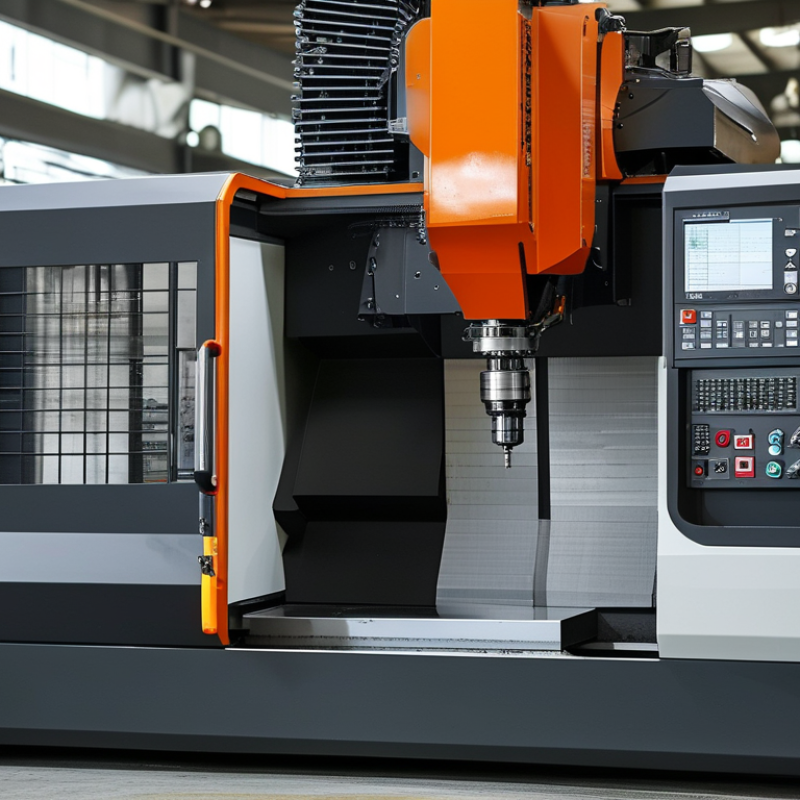
Leading CNC equipment suppliers are defined by more than spindle speed or a polished catalog. Global buyers need repeatable accuracy, documented testing, and dependable post-installation service. The 2024 World Robotics report from the International Federation of Robotics recorded 541,302 industrial robots installed worldwide in 2023. This growth means CNC suppliers should support robotic loading, connected cells, and stable data exchange. A machine that cuts well for one shift is not enough. Buyers should request tolerance results, thermal-compensation records, and sample parts using comparable materials.
Reliability also depends on people. Check technician coverage, spare-parts response times, training hours, and escalation procedures. Deloitte’s 2024 Smart Manufacturing Survey found that 86% of respondents expect smart manufacturing to become a major competitiveness driver within three years. That changes the supplier checklist. Ask about software updates, data security, and integration support. On a factory floor, watch a tool change and inspect chip removal. I would not trust impressive cycle-time claims without setup and maintenance figures. They may hide important costs.
Tips: Build a weighted scorecard before requesting quotations. Give accuracy, uptime, service, cybersecurity, and total ownership cost clear percentages. Ask for three customer references, not one. Test remote support during a planned trial. It may fail occasionally. That failure reveals the supplier’s real response. A leading supplier shares limitations openly, documents assumptions, and helps improve the process instead of selling maximum specifications.
Comparative evaluation of leading CNC supplier profiles using commonly published machine specifications, international quality standards, service capabilities, and buyer-focused purchasing criteria. Company and brand names are intentionally omitted.
| Rank | Supplier Profile | Primary Production Region | Core CNC Equipment | Typical Positioning Accuracy | Typical Spindle Speed | Common Axis Configuration | Automation Capability | Quality and Compliance Indicators | Typical Global Lead Time | Best Fit for Buyers |
|---|---|---|---|---|---|---|---|---|---|---|
| 1 | High-Precision Integrated Manufacturer | Japan | Vertical machining centers Turning centers 5-axis machines | Approximately ±0.005 to ±0.010 mm | 8,000–30,000 rpm | 3-axis, 4-axis, and 5-axis | Robot loading, pallet changers, tool monitoring, production cells | ISO 9001; documented geometric inspection; traceable factory testing | 4–10 months | High-volume production, aerospace components, medical parts, and precision mold work |
| 2 | Premium Heavy-Duty Engineering Supplier | Germany | Large machining centers Mill-turn systems Grinding equipment | Approximately ±0.004 to ±0.010 mm | 6,000–24,000 rpm | 3-axis, 4-axis, 5-axis, and mill-turn | Flexible manufacturing systems, automatic tool management, in-process measurement | ISO 9001; CE conformity; documented risk and safety assessment | 6–14 months | Heavy industrial parts, automotive powertrain, energy, and high-duty machining |
| 3 | Export-Oriented Value and Technology Supplier | Taiwan | Vertical machining centers CNC lathes Double-column machines | Approximately ±0.008 to ±0.015 mm | 8,000–20,000 rpm | 3-axis, 4-axis, and 5-axis | Bar feeders, robotic cells, pallet systems, centralized production monitoring | ISO 9001; CE-marked export models; factory acceptance testing | 3–8 months | General manufacturing, automotive suppliers, job shops, and export-focused factories |
| 4 | Flexible Multi-Industry Automation Supplier | United States | CNC mills CNC turning centers Horizontal machining centers | Approximately ±0.006 to ±0.015 mm | 6,000–18,000 rpm | 3-axis, 4-axis, and 5-axis | Quick-change workholding, cobots, bar feeders, pallet pools, digital monitoring | ISO 9001; documented calibration procedures; North American electrical compliance options | 3–9 months | Contract machining, aerospace supply chains, defense production, and short-run work |
| 5 | Specialized Compact-Precision Supplier | Switzerland | Swiss-type lathes Micro-machining centers Precision grinding systems | Approximately ±0.002 to ±0.008 mm | 10,000–40,000 rpm | Sliding-head turning and multi-axis machining | Bar feeding, automatic part inspection, high-speed tool monitoring | ISO 9001; ISO 13485 options for medical production; detailed calibration records | 5–12 months | Medical devices, watch components, miniature parts, and high-value precision components |
| 6 | High-Productivity European Production Supplier | Italy | Turning centers Mill-turn machines Multi-spindle systems | Approximately ±0.006 to ±0.012 mm | 5,000–15,000 rpm | 2-axis, 3-axis, Y-axis, and mill-turn | Bar loaders, gantry robots, chip conveyors, automatic workpiece transfer | ISO 9001; CE conformity; machine safety documentation | 4–10 months | Automotive, hydraulic components, fittings, and repetitive batch production |
| 7 | Integrated Smart-Factory Supplier | South Korea | Vertical machining centers Horizontal machining centers CNC turning centers | Approximately ±0.006 to ±0.015 mm | 8,000–20,000 rpm | 3-axis, 4-axis, and 5-axis | Robotic tending, pallet pools, tool-life management, factory data connectivity | ISO 9001; CE export configurations; digital inspection reports | 4–9 months | Automotive, electronics, industrial machinery, and connected production lines |
| 8 | Cost-Competitive Full-Range Supplier | China | CNC mills CNC lathes 5-axis machining centers Laser equipment | Approximately ±0.010 to ±0.025 mm | 6,000–18,000 rpm | 3-axis, 4-axis, and 5-axis | Robot loading, pallet changers, automatic lubrication, remote diagnostics | ISO 9001; CE export models; factory inspection and acceptance testing available | 2–7 months | General metalworking, education, fabrication, replacement capacity, and budget-sensitive projects |
| 9 | Specialized Aerospace and Large-Part Supplier | Spain | Large 5-axis centers Gantry mills High-speed machining systems | Approximately ±0.008 to ±0.020 mm | 10,000–30,000 rpm | 3-axis, 4-axis, 5-axis, and gantry configurations | Automatic tool measurement, probing, adaptive machining, chip evacuation systems | ISO 9001; EN 9100 commonly requested for aerospace supply chains; CE conformity | 6–16 months | Aerospace structures, large molds, wind-energy components, and complex profiles |
| 10 | Regional Customization and Service Supplier | Türkiye | Vertical machining centers CNC lathes Sheet-metal CNC systems | Approximately ±0.010 to ±0.025 mm | 6,000–15,000 rpm | 2-axis, 3-axis, and 4-axis | Basic robotic loading, bar feeding, automatic tool measurement, custom fixtures | ISO 9001; CE conformity; regional electrical and safety documentation | 2–6 months | Small and medium manufacturers seeking accessible customization and regional support |
Universal Pumping
625 Apache Trail
Woodstock, GA 30189
Mon - Fri | 9:00 AM - 5:00 PM
Universal Pumping is staffed with industry professionals with 20-45 years experience with high pressure pumping systems. We represent only the “elite producers” in pump manufacturing: Britain’s EMS and Germany’s EMMERICH. Our engineering and manufacturing approach is conservative, and we do not use “guess work” in the design or sales of our pumping and filtration equipment.


