Top 10 Benefits of Using a Ram Pump for Water Systems?

In the quest for efficient water systems, the ram pump stands out as a remarkable solution. As noted by John Smith, a leading expert in sustainable water technology, "The ram pump is a game-changer for communities lacking reliable water access." This simple device harnesses the power of water flow to pump water to higher elevations, making it ideal for remote areas.

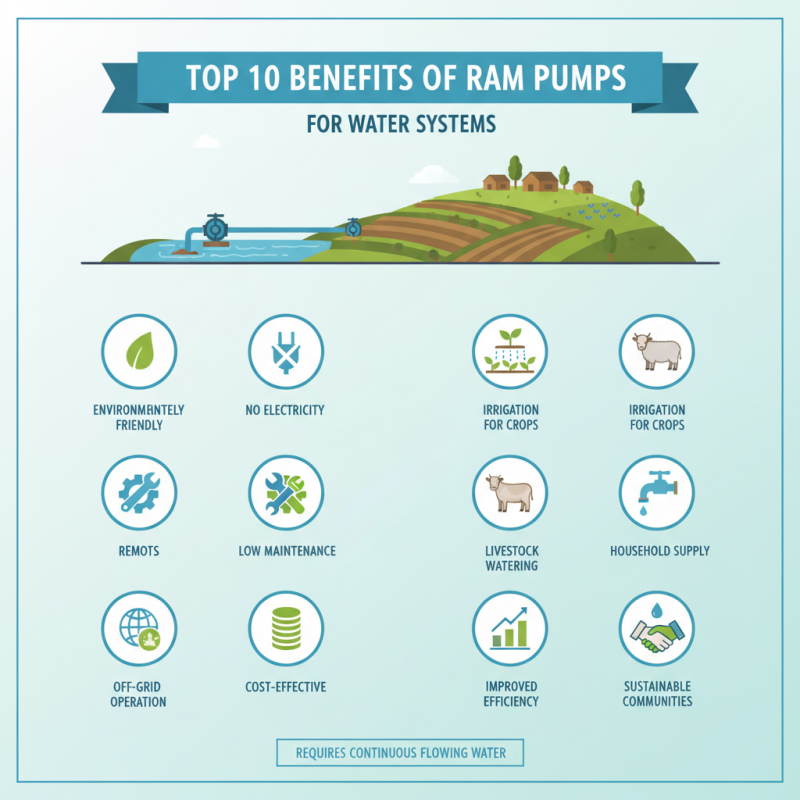
The benefits of using a ram pump are numerous. Firstly, they are environmentally friendly, requiring no electricity. This allows them to operate in off-grid regions. Additionally, they are low maintenance, translating to cost-effectiveness. However, they do require a continuous source of flowing water, which may not always be available. Users must account for this limitation.

Moreover, with advancements in technology, modern ram pumps are becoming even more efficient. They can deliver water to crops, livestock, and households. While they provide substantial advantages, potential users need to consider their specific needs and site conditions. Adopting a ram pump could lead to sustainable water solutions in various communities.
Top 10 Benefits of Using a Ram Pump for Water Systems?

Benefits of Ram Pumps in Sustainable Water Management Systems

Ram pumps are a sustainable solution for water management systems. They harness kinetic energy from flowing water to pump a portion of that water to a higher elevation. This mechanism has gained attention due to its low operational costs and minimal environmental impact. A study from the International Journal of Water Resources highlights that ram pumps can operate efficiently in low-flow conditions, making them ideal for remote areas.

The benefits of ram pumps extend beyond energy efficiency. Research indicates that these pumps can operate with up to 90% energy efficiency, reducing reliance on electricity or fossil fuels. This is crucial as nearly 1.2 billion people lack access to clean water. By using ram pumps, communities can improve water accessibility while cutting down on carbon footprints. Additionally, implementation costs are relatively low, with some systems costing less than $500, making them feasible for many rural areas.

Despite their advantages, there are still challenges. Dependence on a continuous water flow is vital for effective operation. Variability in stream water levels may lead to periods where pumps are less effective. Furthermore, maintenance is necessary to prevent blockages and wear. Regular checks are essential to ensure optimal performance. Addressing these challenges is crucial for maximizing the benefits of ram pumps in sustainable water management.
Top 10 Benefits of Using a Ram Pump for Water Systems

Efficiency of Ram Pumps Compared to Traditional Water Pumping Methods

Ram pumps offer a unique solution for water systems, especially in remote areas. They operate using the energy of falling water, making them notably efficient. A report by the U.S. Department of Energy states that ram pumps can move water with an efficiency rate of 60-70%. This is significantly higher compared to traditional electric pumps, which often range between 30-50%.

In terms of operation, ram pumps require minimal maintenance and no external power source. This independence from electricity can be crucial for off-grid systems. A study by the International Journal of Water Resources highlights that ram pumps can lift water to heights of over 100 feet with only a modest energy input. In contrast, traditional methods may struggle under similar conditions, leading to higher operational costs and energy consumption.

One aspect worth considering is the initial installation complexity. While ram pumps are reliable, setting them up correctly requires expertise. Improper installation can lead to reduced efficiency and operational failures. However, the operational cost savings can outweigh these initial challenges over time, making ram pumps a viable long-term investment for sustainable water management.

Economic Advantages of Implementing Ram Pumps in Rural Areas

The economic advantages of implementing ram pumps in rural areas are significant. These pumps operate without electricity, relying on the energy from flowing water. According to the United Nations, nearly 1.2 billion people live in rural areas without reliable water systems. Ram pumps can provide them with a cost-effective solution. They require minimal maintenance and can last for decades, making them a sustainable option for communities.

One major benefit is the reduction in operational costs. A study from the World Bank suggests that communities using ram pumps save up to 70% on water supply costs compared to diesel-powered systems. This affordability is crucial for farmers who need reliable water for irrigation. It allows them to focus resources on other essential aspects of their livelihood.

Tips: Consider the environmental impact. Ram pumps do not emit greenhouse gases, promoting a greener option for water delivery. Additionally, the initial setup can be a bit challenging. Engaging local expertise can help optimize the installation process. Regular community training can ensure the pumps are used effectively and maintained correctly, maximizing their lifespan and benefits.

Environmental Impact: Reduced Carbon Footprint with Ram Pump Technology

Utilizing ram pump technology offers significant environmental benefits. It's a hydraulic device that lifts water without needing electricity or fuel. By relying on the power of flowing water, it reduces our dependency on fossil fuels. This leads to a smaller carbon footprint. The efficiency of ram pumps means they can provide fresh water while using minimal energy.

While ram pumps are eco-friendly, they do have limitations. They work best in specific conditions, typically requiring a sufficient height of incoming water. Not every location will suit this technology. Regular maintenance is necessary to ensure optimal performance. Sometimes, users may overlook small leaks or wear and tear, which can lead to inefficiencies.

**Tip:** Always check your ram pump for maintenance needs regularly. Inspecting seals and joints can prevent bigger issues down the line. Also, consider the environment before installation. Assess the water source and landscape to ensure compatibility. Adopting ram pumps is a step toward sustainable water management if done thoughtfully.

Top 10 Benefits of Using a Ram Pump for Water Systems

Benefit Description Environmental Impact Carbon Footprint Reduction
Sustainability Uses renewable energy from flowing water. Promotes long-term ecological balance. Low operational emissions.
Low Maintenance Requires minimal upkeep and repairs. Less waste from equipment disposal. Reduces carbon emissions associated with maintenance trips.
Cost-Efficiency Low operating costs compared to electric pumps. Lower pollution from energy production. Decreases dependency on fossil fuels.
Versatility Can be used in various terrains and applications. Adapts to different ecosystems. Minimizes need for infrastructure.
Energy Independence Reduces reliance on grid electricity. Lower environmental impact from grid energy. Promotes local energy sources.
Enhanced Water Supply Reliable water source without electricity. Supports biodiversity by providing water. Conserves energy used in water transport.
Minimal Environmental Disruption Does not require significant land alteration. Preserves natural habitats. Reduces habitat destruction.
Long Lifespan High durability leads to long usage duration. Fewer resources needed for replacements. Lower emissions from manufacturing new pumps.
Community Empowerment Encourages local involvement in water management. Fosters sustainable practices within communities. Encourages reduction in carbon dependencies.
Innovation and Technology Advancements continuously optimize efficiency. Innovative solutions for ecological challenges. Promotes green technology development.

Maintenance Cost Analysis: Longevity of Ram Pumps vs. Electric Pumps

Top 10 Benefits of Using a Ram Pump for Water Systems?

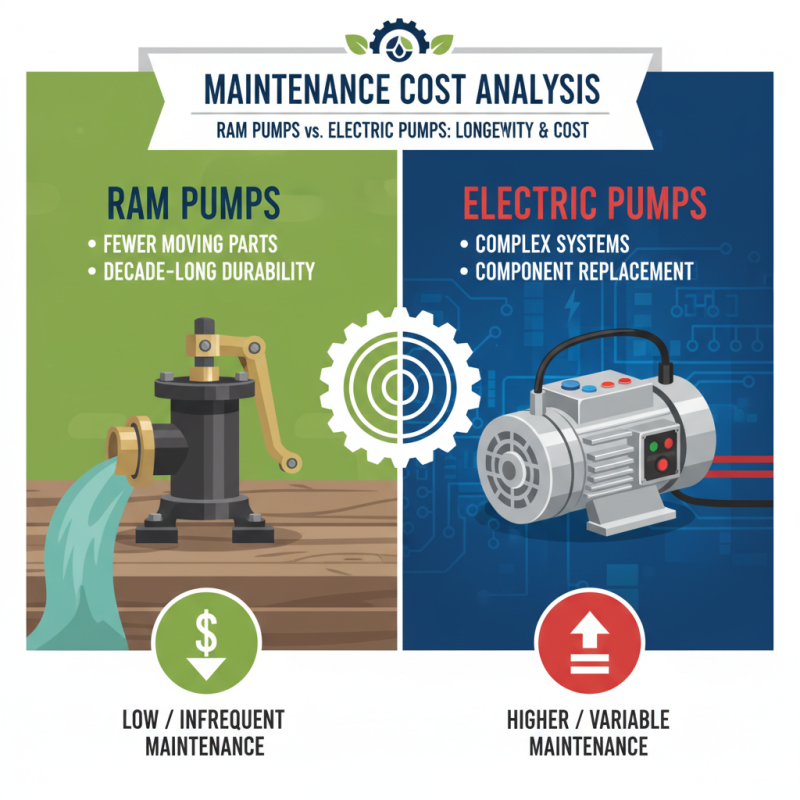
When evaluating the maintenance costs of ram pumps versus electric pumps, various factors emerge. Ram pumps are known for their simplicity and mechanical design. They have fewer moving parts, which often translates to lower repair costs over time. With proper installation, a ram pump can function for decades with minimal attention. In contrast, electric pumps rely on complex electrical systems and motors. These components may need replacement, leading to higher long-term expenses.

Moreover, ram pumps do not require electrical energy, which can reduce operational costs significantly. They harness energy from moving water to push water uphill, making them an eco-friendly choice. However, locations with inconsistent water flow may present challenges for ram pump reliability. Regular monitoring is still essential in maintaining optimal performance.

While ram pumps offer longevity and lower maintenance costs, they are not flawless. Their effectiveness strongly hinges on environmental conditions. Areas with fluctuating water levels might see diminished performance. Therefore, understanding the specifics of your water source is crucial when choosing the right system for your needs. Each type of pump has its unique strengths and weaknesses in maintenance, making informed decisions vital for long-term success.

Company Info

Universal Pumping

625 Apache Trail
Woodstock, GA 30189

Mon - Fri | 9:00 AM - 5:00 PM

Connect With Us

About Universal Pumping

Universal Pumping is staffed with industry professionals with 20-45 years experience with high pressure pumping systems. We represent only the “elite producers” in pump manufacturing: Britain’s EMS and Germany’s EMMERICH. Our engineering and manufacturing approach is conservative, and we do not use “guess work” in the design or sales of our pumping and filtration equipment.