Top 10 Control Valve Types for Global Buyers
Choosing the right Control Valve can protect process stability, energy use, and long-term maintenance budgets. Global buyers face hundreds of specifications, materials, actuators, and connection standards. The same valve may perform well in clean water but fail in abrasive slurry. That difference matters. Our review draws on practical selection experience across water treatment, chemical processing, power generation, oil and gas, and general manufacturing. It focuses on how each valve type behaves in real operating conditions, not only on catalogue descriptions.
The top ten types include globe, ball, butterfly, gate, check, plug, diaphragm, pinch, needle, and control valves with specialized designs. Each has a useful operating range and a clear limitation. Globe valves offer accurate throttling, while ball valves often provide fast shutoff and low pressure loss. Butterfly valves can reduce weight and installation space. Diaphragm and pinch valves may suit corrosive or solids-containing media. These differences affect flow control, sealing performance, maintenance access, and total ownership cost.
A ranking can never be perfect. Every plant has different pressure, temperature, media, safety, and automation requirements. Even experienced teams can overlook cavitation, flashing, actuator sizing, or incompatible trim materials. This guide therefore treats the list as a practical comparison, not a universal prescription. Buyers should verify tested performance, supplier qualifications, documentation, spare-part availability, and applicable industry standards before ordering. Small details matter. A well-chosen valve should match the process, installation environment, and maintenance capability. Reliable selection comes from asking precise questions, checking evidence, and accepting that the cheapest purchase is rarely the lowest-cost solution.
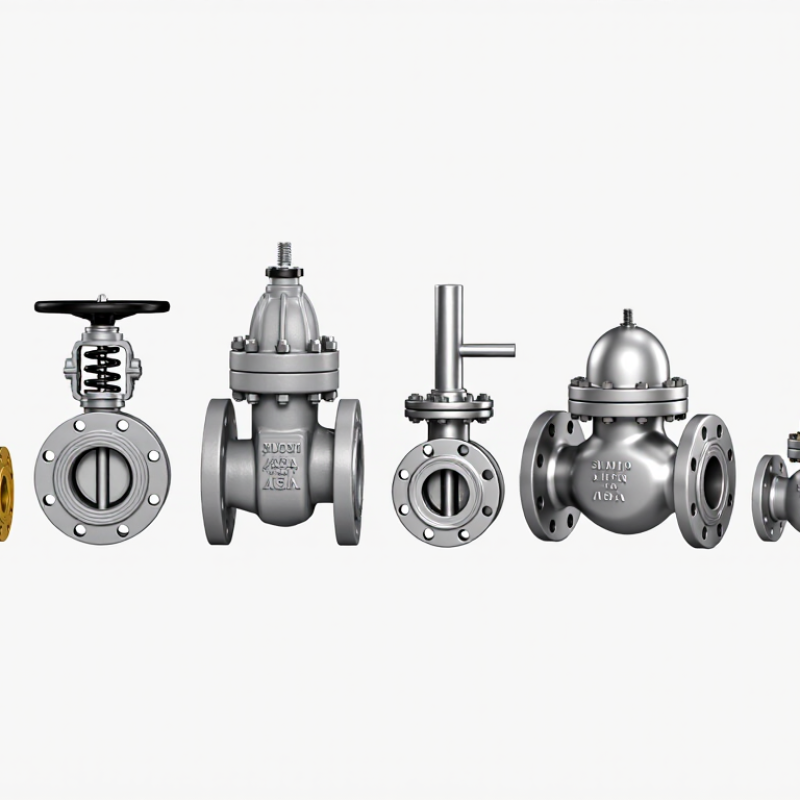
Classify the Top 10 Control Valve Types by IEC 60534 Service Criteria
Top 10 Control Valve Types for Global Buyers
IEC 60534 does not rank valve designs. It evaluates service conditions, including flow capacity, pressure drop, cavitation, flashing, noise, and leakage. This distinction matters. MarketsandMarkets reported that the global control valve market was valued at about USD 7.8 billion in 2024, with process industries driving demand. Buyers need service-based selection, not popularity-based selection.
For high-pressure throttling, globe, angle, and three-way globe valves usually provide predictable control. Globe valves suit severe pressure drops. Angle valves help manage flashing and reduce piping complexity. Three-way valves support mixing or diverting duties. Rotary plug and eccentric rotary plug valves handle viscous or dirty fluids. Ball valves offer high capacity and tight shutoff, but cavitation can develop quickly. Butterfly valves are compact and economical for large lines. Diaphragm valves suit corrosive or hygienic fluids. Pinch valves tolerate abrasive slurries. Axial valves can reduce turbulence in high-capacity systems.
Check the duty, not just the datasheet.
IEC 60534 sizing methods require accurate pressure, temperature, density, and flow data. A 2023 Grand View Research report identified energy, chemicals, and water treatment as major control valve application sectors. Yet field data is often incomplete. That weakness can distort noise predictions and trim selection. The boundaries are not perfectly clean. A butterfly valve may perform well at moderate pressure drops, while a globe valve may become inefficient in oversized lines. Experienced buyers should compare Cv, rangeability, allowable leakage, material compatibility, and maintenance access before approving the final design.
Compare Globe, Ball, Butterfly, and Plug Valves by Cv, Rangeability, and Shutoff
Global buyers often compare the ten main control valve types through Cv, rangeability, and shutoff performance. The four most frequently shortlisted are globe, ball, butterfly, and plug valves.
Globe valves usually deliver precise throttling, with typical rangeability near 30:1 to 50:1. Their Cv is moderate, but their guided trim handles changing loads well. Ball valves provide high Cv, especially in full-port designs, and can achieve tight shutoff. Characterized balls control better than standard full-port balls. Their practical rangeability may reach 100:1, but only with suitable trim and actuation. Butterfly valves offer high flow capacity, low weight, and compact installation. Resilient seats support tight shutoff, while metal seats tolerate higher temperatures. Their rangeability commonly sits below a well-designed globe valve.
Plug valves can produce strong Cv values and reliable isolation. Eccentric designs often throttle more smoothly than straight-through plugs. However, torque can rise as pressure, temperature, or deposits increase. A field lesson matters here: catalog Cv numbers rarely tell the whole story. Actual performance changes with pressure drop, fluid viscosity, cavitation, flashing, and actuator sizing. A valve with excellent Cv may still hunt near the low end of its travel. That detail is easy to miss.
Selection should use operating data, not pipe size alone. Check minimum and maximum flow, required leakage class, seat material, cycling frequency, and available air or electric torque. The “best” valve is sometimes not the most efficient one. Oversizing remains a common, costly mistake.
Top 10 Control Valve Types for Global Buyers
Compare Globe, Ball, Butterfly, and Plug Valves by representative Cv, rangeability, and shutoff class.
Cv values are representative reference points for a 2-inch valve and vary with pressure drop, trim design, body size, and manufacturer. Rangeability expresses the approximate controllable flow span, while a higher shutoff class indicates tighter leakage performance under applicable control-valve standards.
Evaluate Gate, Diaphragm, Pinch, Check, and Mixing Valves for Process Duty
Top 10 Control Valve Types for Global Buyers
Selecting a control valve begins with process duty, not catalog popularity. Gate, diaphragm, pinch, check, and mixing valves each solve different operating problems. Gate valves provide low resistance during isolation, but they respond slowly to throttling demands. Diaphragm valves handle corrosive or hygienic fluids well, while their flexible diaphragms require scheduled inspection. Pinch valves tolerate abrasive slurries because the sleeve contacts the fluid directly. They can still suffer from uneven wear.
Check valves protect pumps and pipelines from reverse flow. Selection depends on pressure, flow direction, closing speed, and water hammer risk. Mixing valves combine streams with different temperatures or concentrations. Accurate control requires suitable sensors and stable actuator response. Ball, butterfly, globe, plug, and needle valves complete the wider group of ten common types. Each has a useful place. None is universally best.
Tips: Match the valve body and seals with fluid chemistry, temperature, solids, and pressure. Ask suppliers for tested flow coefficients and maintenance records. Inspect sample drawings carefully; a small internal passage can restrict slurry service. In field reviews, buyers sometimes focus too heavily on purchase price. That choice can increase downtime later. I have also seen oversized valves hunt during operation. The specification looked safe, but control became unstable. Recheck minimum flow, actuator sizing, and available installation space before approval.
Select Actuators and Fail-Safe Functions Using IEC 61508 SIL Principles
Selecting among the top 10 control valve types starts with the safety function, not the catalogue. Globe, ball, butterfly, plug, eccentric plug, diaphragm, pinch, gate, needle, and angle valves behave differently during faults. IEC 61508 SIL principles require a documented risk assessment before choosing the valve and actuator. SIL applies to the complete safety instrumented function, including sensors, logic solvers, actuators, and final elements. A valve may have strong process performance yet fail the required probability target.
Tips: Define the safe position clearly. Use fail-open, fail-closed, or fail-in-place only after reviewing the hazard. Pneumatic spring-return actuators often provide predictable movement. Electric actuators may need stored energy or independent backup. Hydraulic systems can deliver high force, but leakage and maintenance deserve close attention. Check response time at the actual pressure and temperature.
Field reviews often uncover a simple weakness: the actuator reaches its position, but the valve does not provide reliable isolation. Partial-stroke testing, diagnostic coverage, proof-test intervals, and manual override controls must match the SIL calculation. Double-acting actuators can work, but their failure response needs careful engineering. Do not assume “normally closed” means fail-safe. It depends on the process consequence. Engineers sometimes overspecify SIL without improving the real risk picture. That deserves a second review. Sensor voting, air quality, friction, and shutdown pressure can change the result. Good documentation records these assumptions before procurement.