
What Are the 2026 Top Types of Electrical Switchgear Boxes?

Choosing the best Electrical Switchgear Box in 2026 requires more than comparing prices or enclosure size. Electrical networks now demand safety, fault control, monitoring, and easier maintenance. A compact cabinet may look efficient, yet it can become difficult to service after years of dust, heat, and cable changes.

This guide examines the leading switchgear types used in commercial buildings, factories, renewable-energy sites, and utility systems. It considers low-voltage switchgear, medium-voltage metal-enclosed units, metal-clad designs, modular systems, outdoor weatherproof boxes, and smart switchgear with digital monitoring. Each type serves a different operating environment. A factory may need arc-resistant construction and clear isolation points. A solar installation may require outdoor protection, thermal management, and remote status data.

Reliable selection begins with verified technical information. Rated voltage, short-circuit withstand, ingress protection, busbar capacity, and maintenance access all affect long-term performance. Standards such as IEC and IEEE can provide useful reference points, but local electrical codes and project specifications remain essential. Manufacturer testing records also deserve careful review.

The word “top” is not absolute. It depends on the application. Sometimes, the most advanced system creates unnecessary cost and training demands. A simpler box may perform better when conditions are stable and technicians need familiar controls. This article compares practical strengths, limitations, and emerging features, helping readers make a safer and more evidence-based decision for 2026.
What Are the 2026 Top Types of Electrical Switchgear Boxes?

Understanding Electrical Switchgear Boxes and Their Main Functions

What Are the 2026 Top Types of Electrical Switchgear Boxes?

Understanding Electrical Switchgear Boxes and Their Main Functions

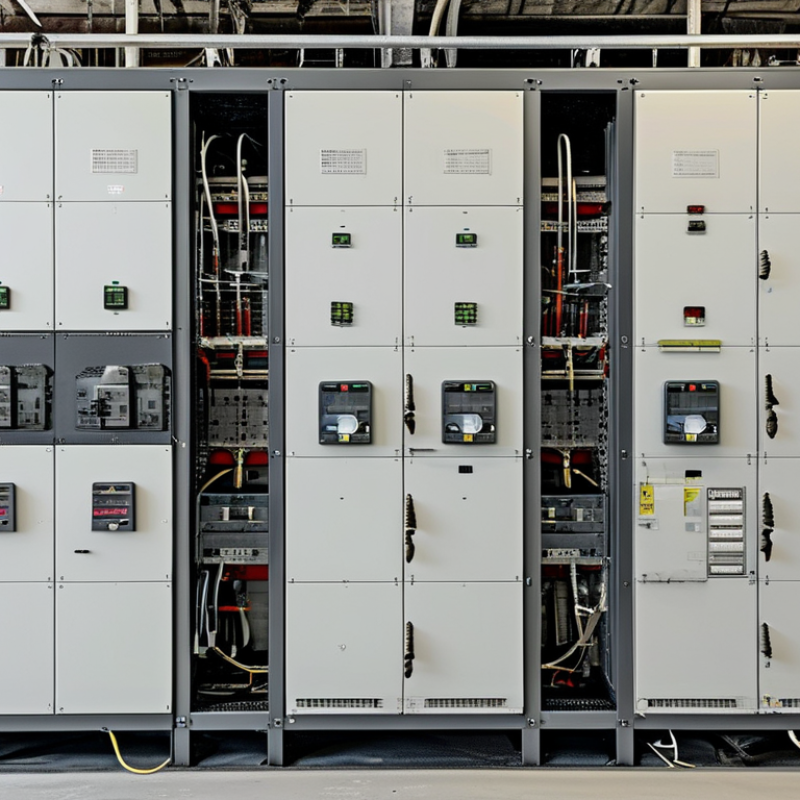
Electrical switchgear boxes house devices that control, protect, and isolate electrical circuits. In 2026, common types include low-voltage switchgear, medium-voltage metal-enclosed units, metal-clad switchgear, and outdoor weather-resistant boxes. Gas-insulated designs also serve locations where space is limited. Each type supports a different voltage range, installation environment, and maintenance plan.

The main function is safety. Circuit breakers interrupt fault currents before damaged equipment creates greater risks. Disconnectors provide visible isolation during maintenance. Busbars distribute power inside the enclosure, while relays detect overloads, short circuits, and abnormal voltage. Modern boxes may include sensors for temperature, humidity, and partial discharge. During a practical inspection, technicians check cable glands, grounding points, door seals, and signs of heat discoloration. Small details matter. A loose connection can quietly become a serious failure.

Tips: Match the enclosure rating with dust, water, and corrosion exposure. Confirm the required short-circuit withstand rating before selection. Leave enough working space for testing and cable replacement. Do not rely only on appearance. A clean box may still contain aging contacts or poor ventilation. Maintenance records should include torque checks, insulation tests, and fault history. No design is perfect. Conditions change, and an initially suitable enclosure may need reassessment after expansion, higher loads, or repeated trips.

What Are the 2026 Top Types of Electrical Switchgear Boxes? - Understanding Electrical Switchgear Boxes and Their Main Functions

Switchgear Box Type Typical Voltage Class Main Switching or Protection Devices Primary Functions Typical Applications Key Characteristics Common Reference Standards
Low-Voltage Switchgear Assembly Up to 1,000 V AC Air circuit breakers, molded-case circuit breakers, fuses, contactors, and protective relays Power distribution, overload protection, short-circuit protection, isolation, and metering Commercial buildings, factories, data centers, infrastructure, and utility substations Modular construction; fixed or withdrawable circuit-breaker compartments; copper or aluminum busbars IEC 61439-1 and IEC 61439-2
Metal-Enclosed Medium-Voltage Switchgear Typically above 1 kV to 36 kV Vacuum circuit breakers, load-break switches, fuses, earthing switches, and protection relays Feeder control, fault interruption, busbar protection, isolation, and safe access control Industrial plants, commercial power systems, renewable-energy plants, and distribution substations Compartmentalized metal enclosure; may use fixed or withdrawable circuit breakers IEC 62271-200
Metal-Clad Switchgear Commonly medium voltage up to approximately 38 kV Withdrawable vacuum circuit breakers, instrument transformers, relays, and grounding switches High-reliability switching, feeder protection, equipment isolation, and arc-fault risk reduction Utility substations, heavy industry, mining, transportation, and large manufacturing facilities Separate grounded metal compartments; withdrawable breakers support maintenance and testing IEEE C37.20.2 and applicable local electrical codes
Gas-Insulated Switchgear Medium and high voltage; designs range from several kilovolts to transmission voltages Circuit breakers, disconnectors, earthing switches, current transformers, and voltage transformers Compact power switching, fault interruption, busbar sectionalizing, and electrical isolation Urban substations, indoor substations, offshore facilities, renewable-energy hubs, and space-limited sites Sealed metal enclosure with insulating gas or gas mixture; small footprint and protected internal conductors IEC 62271-203 for gas-insulated metal-enclosed switchgear above 52 kV
Hybrid Insulated Switchgear Medium to high voltage Combined circuit breakers, disconnectors, earthing switches, and air-insulated or gas-insulated bus sections Power switching and protection where reduced footprint is needed without fully gas-insulating every section Substation extensions, wind farms, solar plants, industrial networks, and constrained sites Combines air-insulated and gas-insulated technologies; can simplify retrofit projects Applicable parts of the IEC 62271 series
Ring Main Unit Typically 6 kV to 36 kV Load-break switches, circuit breakers, fuses, disconnectors, and earthing switches Ring-network switching, transformer protection, feeder isolation, and supply continuity Urban distribution networks, commercial developments, apartment complexes, and compact substations Compact, sealed or compartmentalized construction; often configured with two ring ways and one transformer way IEC 62271-200 and IEC 62271-103, according to the equipment configuration
Motor Control Center Usually up to 1,000 V AC Circuit breakers, fuses, contactors, overload relays, soft starters, and variable-speed drives Motor starting, stopping, speed control, overload protection, short-circuit protection, and monitoring Manufacturing plants, water treatment facilities, HVAC systems, process industries, and pumping stations Grouped motor feeders in a common enclosure; available with fixed or withdrawable units IEC 61439-1 and IEC 61439-2
Automatic Transfer Switchgear Low voltage, commonly up to 1,000 V AC Mechanically or electrically interlocked circuit breakers, transfer switches, and control relays Transfers critical loads between normal and emergency power sources Hospitals, data centers, emergency systems, airports, commercial buildings, and industrial plants Prevents unintended paralleling of sources unless specifically designed for closed-transition operation IEC 60947-6-1 and applicable installation standards

Note: Voltage ranges are typical industry classifications rather than universal limits. The actual rating, short-circuit withstand capability, ingress protection, insulation level, and internal arc classification must be selected according to the system design, installation environment, and applicable standards.

Comparing the Top Switchgear Box Types Expected in 2026

Comparing the Top Switchgear Box Types Expected in 2026

In 2026, metal-enclosed switchgear will remain a practical choice for factories, commercial buildings, and utility rooms. Its steel housing protects conductors from dust, impact, and accidental contact. Maintenance teams can usually inspect compartments without disturbing the entire installation. However, enclosure quality and internal separation vary widely, so specifications deserve careful review.

Metal-clad switchgear offers stronger compartmentalization and clearer isolation between breakers, busbars, and cable terminations. It suits medium-voltage systems where arc-flash control and service continuity matter. Gas-insulated switchgear uses a compact sealed enclosure, making it valuable where floor space is limited. It also performs well in damp or polluted environments. Yet, specialized servicing and gas-handling procedures can increase lifecycle complexity.

Solid-insulated switchgear is gaining attention because it reduces reliance on insulating gas and supports compact layouts. Low-voltage switchboards remain important for data facilities, workshops, and building distribution. They typically prioritize easy access, modular protection, and straightforward testing. Space matters. In field inspections, I have seen impressive ratings weakened by poor cable bending space, loose terminations, or blocked ventilation. Digital monitoring may improve fault visibility in 2026, but sensors cannot replace disciplined testing. Forecasts are not guarantees. Climate, load growth, maintenance skills, and local standards should guide the final selection.

Examining Voltage Ratings, Protection Systems, and Enclosure Designs

What Are the 2026 Top Types of Electrical Switchgear Boxes?

In 2026, switchgear boxes are commonly selected by voltage rating, fault capacity, and installation environment. Low-voltage boxes support commercial buildings, factories, and small distribution systems. Medium-voltage designs serve substations, utilities, and heavy industrial equipment. High-voltage enclosures require stricter insulation, clearance, and testing procedures. The label matters. Engineers should check continuous current, short-circuit withstand, and interrupting capacity, not voltage alone. Temperature, altitude, and moisture can also change performance.

Protection systems determine how safely a box responds to abnormal conditions. Circuit breakers interrupt overloads and short circuits, while fuses provide fast fault clearing in compact assemblies. Digital relays can monitor current, voltage, ground faults, and equipment status. Selective coordination helps isolate one faulty feeder instead of shutting down an entire facility. Arc-resistant construction may redirect pressure and hot gases away from operators. Still, no enclosure replaces proper maintenance, testing, and site-specific risk assessment.

Enclosure design affects service life and daily usability. Indoor boxes may use painted steel with controlled ventilation. Outdoor versions need stronger sealing, drainage, corrosion resistance, and UV protection. Modular compartments simplify inspection and reduce accidental contact with energized sections. Clear viewing windows can help operators check indicators without opening the door. Small details matter. A tidy enclosure can still hide poor cable bending space or weak grounding connections. Designers sometimes overfocus on appearance, while heat buildup and condensation receive less attention. That trade-off deserves another review before installation.

What Are the 2026 Top Types of Electrical Switchgear Boxes?

Examining voltage ratings, protection systems, and enclosure designs

Low-Voltage Assemblies Typically up to 1 kV AC, using metal enclosures, segregated compartments, circuit breakers, busbars, and access protection such as IP2X or IPXXB where specified.
Medium-Voltage AIS Air-insulated, metal-enclosed switchgear commonly designed for ratings above 1 kV and up to 52 kV, with earthing switches, mechanical interlocks, and optional internal-arc classification.
Medium-Voltage GIS Gas-insulated compartments reduce the footprint and isolate live conductors. Sealed compartments, pressure-relief features, and interlocking systems support operational safety.
High-Voltage AIS and GIS High-voltage equipment commonly uses standardized ratings such as 72.5, 145, 245, 420, and 550 kV. AIS requires more clearance, while GIS provides a compact sealed enclosure.

The chart shows representative IEC-aligned rated-voltage bands, not market share or a universal limit for every product. Actual ratings, enclosure IP codes, internal-arc performance, insulation medium, and protection functions must be selected according to the applicable installation standard and system design.

Matching Switchgear Boxes to Industrial, Commercial, and Utility Uses

What Are the 2026 Top Types of Electrical Switchgear Boxes?

Matching Switchgear Boxes to Industrial, Commercial, and Utility Uses

Industrial facilities often need rugged metal-enclosed switchgear boxes for motors, furnaces, and heavy production lines. These systems protect equipment from short circuits, dust, and accidental contact. Withdrawable designs can reduce maintenance time because technicians remove breakers without rebuilding the entire section. However, they require accurate alignment and disciplined inspection.

Commercial buildings usually favor compact low-voltage switchgear for lighting, elevators, HVAC systems, and emergency power. Modular boxes simplify expansion when a building gains new floors or larger cooling loads. Smart monitoring can track current, temperature, and breaker status. It improves visibility, but sensors still need calibration and human review. A screen cannot replace a careful inspection.

Utility projects often select medium-voltage metal-clad switchgear or gas-insulated switchgear. Metal-clad equipment suits substations and industrial feeders where service access matters. Gas-insulated designs save space in dense urban substations, although installation procedures are more demanding. Engineers should compare voltage, fault current, enclosure rating, climate, and future capacity. Field experience shows that heat, moisture, and cramped cable bends cause avoidable failures. Space changes everything. A perfect selection does not exist. Reviewing test records, protection settings, and maintenance access usually produces a safer, more reliable match.

Evaluating Safety, Smart Features, Maintenance, and Selection Criteria

What Are the 2026 Top Types of Electrical Switchgear Boxes?

Modern electrical switchgear boxes are designed around safety, intelligence, and service access. Common types include low-voltage distribution boxes, medium-voltage metal-enclosed units, and compact modular enclosures. Each type suits different load levels, fault conditions, and installation spaces. In field inspections, loose terminals and blocked ventilation often create more risk than expected. Clear labeling, insulated busbars, grounding continuity, and reliable mechanical interlocks remain essential. Arc-resistant construction can reduce injury risks during internal faults, but it never replaces proper operating procedures.

Smart features are changing daily supervision. Temperature sensors can identify hot cable joints before insulation damage appears. Remote status signals can reveal breaker trips, door openings, or abnormal current patterns. However, connected monitoring is not automatically secure or accurate. Sensors need calibration, protected communication, and human review. A dashboard may look impressive.

Maintenance planning should include infrared inspections, torque verification, insulation testing, and cleaning schedules. Technicians also need enough clearance to remove covers safely. Poor access turns a simple repair into a long shutdown. Keep service records with measured values, not only check marks. This exposes gradual changes. Selection should consider rated current, short-circuit withstand, enclosure protection, humidity, dust, future expansion, and local installation requirements. The cheapest box may become expensive when replacement parts or downtime are difficult. No checklist is perfect; unusual site conditions still deserve an experienced engineering review.

Company Info

Universal Pumping

625 Apache Trail
Woodstock, GA 30189

Mon - Fri | 9:00 AM - 5:00 PM

Connect With Us

About Universal Pumping

Universal Pumping is staffed with industry professionals with 20-45 years experience with high pressure pumping systems. We represent only the “elite producers” in pump manufacturing: Britain’s EMS and Germany’s EMMERICH. Our engineering and manufacturing approach is conservative, and we do not use “guess work” in the design or sales of our pumping and filtration equipment.