Universal Pumping | High Pressure Pumps
High Pressure Pumps for Difficult to Pump Slurry, Sludge, and Food Waste.
Selecting China’s top high pressure piston pump manufacturers requires more than comparing catalogue prices. Buyers need evidence of engineering depth, production consistency, and dependable after-sales support. A strong high pressure piston pump should deliver stable flow, controlled pressure, and long service life under demanding conditions.
This introduction examines manufacturers serving industrial cleaning, water treatment, hydraulic equipment, mining, and process applications. It considers pump materials, pressure ratings, flow accuracy, sealing systems, drive configurations, and customization capability. Factory audits can reveal important details. Look for CNC machining, clean assembly areas, calibrated test benches, and traceable inspection records. Details matter.
Reliable manufacturers should explain their testing methods clearly. They should provide performance curves, material specifications, maintenance guidance, and realistic delivery commitments. Certifications can support credibility, but certificates alone do not prove field performance. Customer references, technical response times, and spare-parts availability often reveal more. A practical evaluation also checks whether engineers understand fluid compatibility, temperature changes, cavitation risks, and duty cycles.
No single manufacturer fits every project. A pump designed for pressure washing may not suit chemical dosing or continuous hydraulic service. This distinction is easy to overlook. Some published specifications may reflect ideal laboratory conditions rather than everyday operation. That deserves careful questioning. The following overview compares established Chinese manufacturers through technical capability, quality control, application experience, customization, and customer reliability, helping international buyers make a more informed and defensible decision.
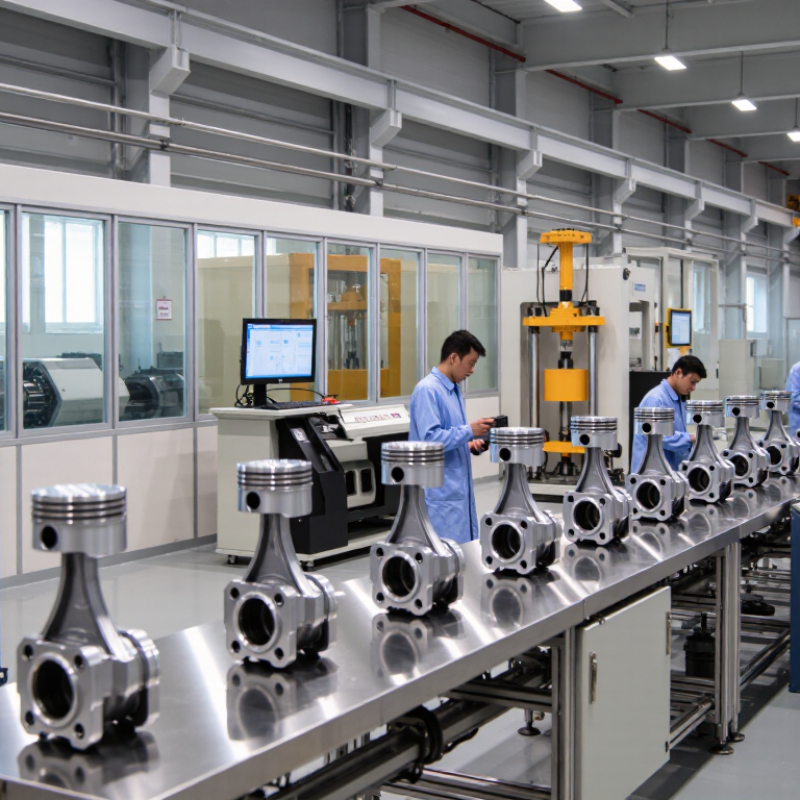
China’s high-pressure piston pump market includes equipment rated above 250 bar for industrial cleaning, pressure testing, water treatment, and process injection. Manufacturers in this segment range from large engineering factories to specialized pump workshops. Their capabilities differ widely. A reliable supplier should provide tested pressure curves, material records, seal specifications, and traceable inspection reports.
Above 250 bar, small design details become important. Forged stainless steel or hardened alloy components can improve durability under repeated loading. Plunger surface finish also affects seal life. Proper filtration protects valves from particles. Pressure pulsation may require a dampener, especially in test systems or long pipelines. Cooling and lubrication deserve attention too. High pressure creates heat quickly.
In supplier evaluations, I would inspect the assembly area, test bench, and spare-parts process. Factory experience matters more than attractive catalog numbers. Ask whether the pump reached its rated pressure during continuous testing, not only during a short demonstration. Some specifications look complete but omit inlet conditions, duty cycle, or expected service life. That omission deserves questioning. It is also wise to compare actual flow at working pressure, because nominal flow may be measured under easier conditions. A careful buyer should verify documentation, operator training, maintenance access, and response time before selecting a Chinese manufacturer.
China’s high-pressure piston pump sector serves water jetting, hydrotesting, mining, and industrial cleaning. Leading manufacturers typically offer models from 300 to 700 bar, with triplex and radial piston designs covering different flow demands. Their portfolios often include stainless-steel wet ends, ceramic plungers, forged crankcases, and oil-bath lubrication systems. Compact frames matter when a pump must fit beside a narrow test skid.
Market data supports this demand. Grand View Research estimated the global industrial pumps market at more than USD 60 billion in 2022, while MarketsandMarkets has reported continued growth in high-pressure pump applications through 2028.
These figures are not perfectly comparable. Still, they show why pressure efficiency and serviceability increasingly influence procurement decisions.
At 300 bar, buyers often prioritize steady flow and lower operating costs. At 700 bar, sealing quality, pulsation control, and fatigue resistance become critical.
Experienced suppliers provide pressure-flow curves, material certificates, factory test records, and replacement-part lists. Where applicable, API 674 alignment can strengthen technical evaluation, although not every application requires that standard. Ask for endurance-test details.
A practical inspection should examine crankshaft balance, plunger finish, valve access, and pressure relief protection. Some product pages promise impressive pressure ratings but provide little information about continuous-duty performance. That gap deserves attention. Manufacturers with transparent testing data usually offer more dependable technical support, yet even strong catalogs may omit installation mistakes that shorten pump life.
China’s top high-pressure piston pump manufacturers are often judged by real operating data, not catalog promises. Axial and radial piston pumps can both deliver high pressure, but their flow behavior differs significantly. Axial designs usually provide smoother, higher-speed output in compact packages. Radial pumps often handle severe pressure cycles with strong mechanical stability. The correct choice depends on pressure, speed, fluid viscosity, and duty pattern.
Flow rates approaching 1,000 L/min require careful system design. Large axial units may reach this range efficiently in continuous hydraulic applications. They suit presses, injection equipment, and large mobile machinery. Radial pumps commonly serve slower, high-pressure circuits where reliability matters more than compact size. A test bench should record pressure ripple, oil temperature, noise, and actual flow under load. Static ratings can mislead.
Details matter. Check shaft alignment, filtration accuracy, cooling capacity, and spare-part tolerances before selecting a manufacturer. A reliable supplier should provide factory test records, material specifications, performance curves, and traceable quality controls. Ask how the pump performs after prolonged operation, not only at its best laboratory point. That question often reveals more than a polished brochure. In practice, reaching 1,000 L/min may require parallel pumps, larger piping, and stronger filtration. Bigger is not always better. A poorly matched pump wastes energy and accelerates wear. Some selection decisions remain uncertain until field measurements confirm them.
| Performance Dimension | Axial Piston Pump | Radial Piston Pump | Selection Implication |
|---|---|---|---|
| Basic operating principle | Pistons are arranged parallel or nearly parallel to the drive shaft and operate through a swash plate or bent-axis mechanism. | Pistons are arranged radially around an eccentric cam, crank, or reaction ring. | The architecture determines speed capability, package shape, pressure capacity, and control options. |
| Typical pressure range | Approximately 250–420 bar for many industrial designs; specialized versions can be rated higher. | Approximately 250–700 bar for many high-pressure designs, depending on displacement, speed, and duty cycle. | Radial designs are often preferred when sustained high pressure is more important than compact high-speed operation. |
| Flow-rate capability | From a few litres per minute to several hundred litres per minute per pump; large systems may approach 1,000 L/min through high-displacement units or multiple pumps. | Commonly selected for low-to-medium flow at high pressure; higher total flows can be achieved with larger units or pump combinations. | A stated flow of 1,000 L/min should be verified against pressure, displacement, motor power, and whether the value is for one pump or a combined system. |
| Flow calculation | Theoretical flow: Q = V × n; actual flow is reduced by volumetric losses and is commonly expressed as Qactual = V × n × ηv. | Uses the same displacement-and-speed relationship, with efficiency affected by leakage, pressure, viscosity, and operating temperature. | Always compare rated flow at the specified pressure and speed rather than comparing maximum catalogue flow alone. |
| Speed capability | Generally supports higher shaft speeds, often suitable for direct coupling to electric motors and mobile-engine power units. | Typically operates at lower or moderate speeds, particularly in high-pressure and high-displacement applications. | Choose axial technology when high flow from a compact, high-speed package is a priority. |
| Variable-displacement control | Widely available with manual, pressure-compensated, load-sensing, proportional, and electro-hydraulic controls. | Fixed-displacement versions are common; variable-displacement configurations are available but generally less widespread. | Axial pumps are usually more flexible for systems requiring energy-efficient flow matching. |
| Volumetric efficiency | Often approximately 90–98% at rated conditions, depending on design, pressure, speed, fluid viscosity, and wear. | Often approximately 90–98% at rated conditions, with performance strongly dependent on clearances and operating pressure. | Efficiency figures must be compared at identical pressure, speed, oil temperature, and viscosity. |
| Overall efficiency | Typically about 85–95% near the rated operating point for a well-matched industrial system. | Typically about 85–95% near the rated operating point, with strong performance in steady high-pressure service. | Pump efficiency alone does not represent total system efficiency; valves, piping, cooling, and controls also contribute losses. |
| Pressure pulsation and noise | Noise and pulsation depend on piston count, port-plate design, speed, and control settings; careful inlet and outlet design is important. | Can provide smooth delivery with an appropriate number of pistons, although low-speed torque pulsation and structural vibration may need attention. | Use manufacturer test data for sound pressure and pressure ripple when acoustic performance is critical. |
| Package and installation | Usually compact and well suited to mobile equipment, industrial power units, injection equipment, and test systems. | Often more cylindrical or mechanically robust, with a footprint that can be advantageous in specialized high-pressure layouts. | Check shaft alignment, mounting orientation, inlet conditions, service access, and required cooling capacity. |
| Typical applications | Mobile hydraulics, industrial machinery, injection molding, presses, marine systems, construction equipment, and closed-loop hydrostatic drives. | High-pressure clamping, hydraulic presses, machine tools, lifting systems, intensifiers, lubrication systems, and compact power packs. | Application pressure, duty cycle, required control response, and available installation space should guide the final choice. |
| Maintenance considerations | Requires clean hydraulic fluid, correct inlet conditions, suitable filtration, and periodic inspection of rotating-group and control components. | Requires clean fluid and regular inspection of pistons, seals, bearings, eccentric components, and high-pressure connections. | Fluid cleanliness and correct commissioning are major factors in achieving expected service life for both designs. |
| Best-fit summary | Best suited to applications needing high speed, high flow, compact packaging, and sophisticated variable-flow control. | Best suited to applications needing high pressure, robust steady operation, and comparatively low-to-medium flow. | For flow rates approaching 1,000 L/min, evaluate a complete multi-pump or integrated hydraulic system rather than relying only on pump type. |
Note: Actual ratings vary by displacement, speed, fluid, temperature, duty cycle, inlet pressure, and design configuration. Pressure and flow values should be confirmed from the applicable technical datasheet.
High-pressure piston pumps are often judged by two practical numbers: 90–95% volumetric efficiency and ISO 9001 certification. The first figure indicates how closely actual flow matches theoretical displacement. It matters when a system runs at 350 bar, where leakage can raise oil temperature and reduce actuator speed. Research and Markets’ Hydraulic Pumps Global Market Report 2024 identifies energy efficiency and reliability as major purchasing factors in industrial hydraulic equipment.
Testing conditions matter greatly. Oil viscosity, operating temperature, rotational speed, and pressure can change volumetric efficiency within minutes. ISO 4409:2019 provides methods for measuring displacement, flow, and performance in hydraulic positive-displacement pumps. A credible manufacturer should show test data at defined conditions, not only publish “up to 95%” on a product page.
ISO 9001 supports process consistency. It does not certify a pump’s efficiency or pressure rating. That distinction is easy to miss. The certification covers quality-management systems, including traceability, corrective action, and controlled production. The 2024 ISO Survey reports more than one million ISO 9001 certificates worldwide, showing broad adoption rather than guaranteed technical superiority. In field experience, a pump rated at 93% may perform worse after contamination, poor inlet conditions, or seal wear. Buyers should request test curves, cleanliness requirements, and service records. Published data is useful, but imperfect.
The chart shows representative volumetric-efficiency values within the commonly stated 90–95% performance range for high-pressure piston pumps. Efficiency may vary with pressure, speed, fluid viscosity, temperature, and pump condition. ISO 9001 refers to a quality-management-system certification and is not a direct efficiency measurement.
Choosing China’s top high pressure piston pump manufacturers requires more than comparing catalog ratings. Start with working pressure, peak pressure, and safety margin. A pump rated for 40 MPa may not suit continuous operation near that limit. Request pressure test records and performance curves. Confirm displacement at the actual operating speed, not only at the laboratory speed. Fixed displacement pumps offer predictable flow, while variable models support changing process demands. Noise, heat, and efficiency also reveal practical quality.
Materials deserve close attention. Hardened steel components can improve wear resistance, while stainless steel may better handle moisture or aggressive fluids. Seal material must match temperature, fluid chemistry, and duty cycle. A small compatibility mistake can cause leakage within weeks. I have seen specifications look excellent, yet the pump failed because the seal selection was treated as an afterthought. Ask about surface treatment, cleanliness control, and inspection procedures.
Tips: Compare lifetime cost, not only purchase price. Request sample test data, spare-parts availability, and clear warranty terms. Service support matters when a pump stops beside a production line. Check response times, troubleshooting procedures, installation guidance, and technician training. Local support can reduce downtime, but verify its actual capabilities. A polished brochure is not proof. Speak with technical staff and ask difficult questions. Also, leave room for honest uncertainty; real operating conditions often differ from initial assumptions.
Universal Pumping
625 Apache Trail
Woodstock, GA 30189
Mon - Fri | 9:00 AM - 5:00 PM
Universal Pumping is staffed with industry professionals with 20-45 years experience with high pressure pumping systems. We represent only the “elite producers” in pump manufacturing: Britain’s EMS and Germany’s EMMERICH. Our engineering and manufacturing approach is conservative, and we do not use “guess work” in the design or sales of our pumping and filtration equipment.