Top 10 Types of Sludge Pumps for Global Buyers

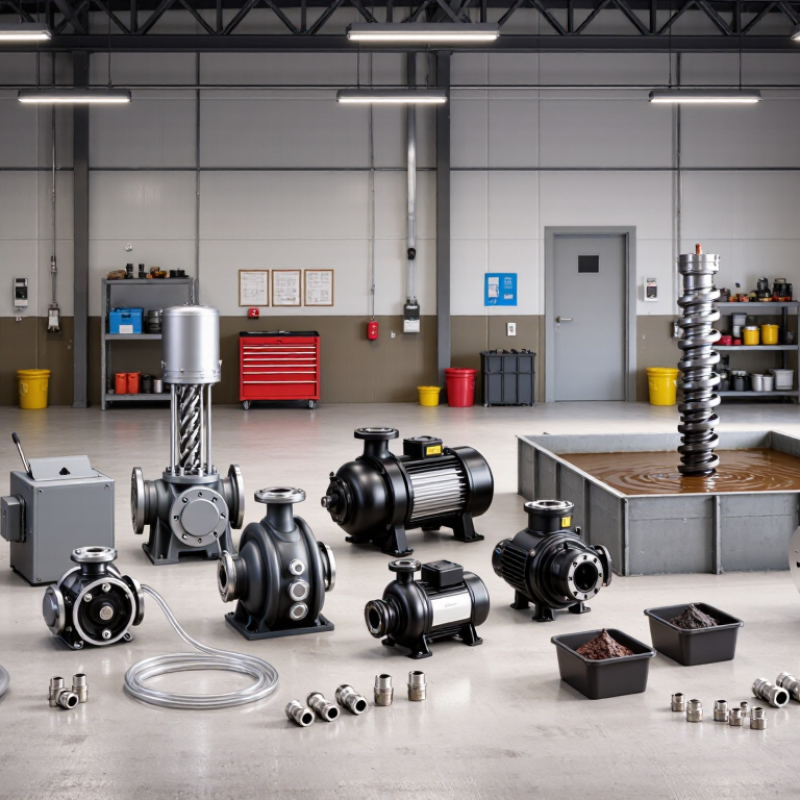
Choosing the right sludge pumps is rarely a simple catalogue exercise. Global buyers face changing sludge density, abrasive particles, limited power, and demanding discharge distances. A pump that performs well in a municipal treatment plant may struggle in a mining workshop or food-processing facility.

This guide examines the top 10 types of sludge pumps used across international markets. It considers centrifugal, progressive cavity, diaphragm, peristaltic, piston, screw, air-operated, submersible, vortex, and cutter pumps. Each design handles solids differently. Some tolerate fibrous material, while others provide steadier dosing or higher pressure. Practical selection depends on flow rate, head, particle size, viscosity, temperature, and maintenance access.

Details matter.

Experienced operators often inspect the suction line before blaming the pump. A blocked screen, undersized hose, or poor valve arrangement can reduce performance quickly. Materials also deserve careful attention. Abrasive sludge may require hardened components, while chemically aggressive media can damage ordinary elastomers. Buyers should request verified performance curves, tested materials, spare-parts availability, and clear warranty terms from established manufacturers.

No list is perfect. Field conditions are messier than specifications suggest. A pump rated for thick sludge may still underperform when air enters the line or solids settle overnight. This overview therefore compares strengths, limitations, operating costs, and typical applications without naming one universal winner. Reliable decisions come from matching pump behavior with the actual sludge, site, and service team.
Top 10 Types of Sludge Pumps for Global Buyers

What Sludge Pumps Are and How They Handle Difficult Fluids

Sludge pumps move thick, abrasive, and often chemically active fluids that ordinary water pumps cannot manage. Sludge may contain sand, fibers, grease, grit, or trapped air. Its consistency can change within minutes. A pump that works at morning startup may struggle after solids settle.

Common designs include centrifugal, positive displacement, progressive cavity, diaphragm, peristaltic, and submersible pumps. Centrifugal models suit flowing sludge with moderate solids. Positive displacement pumps provide steadier flow through dense material. Diaphragm pumps tolerate air and intermittent operation. Peristaltic pumps isolate the fluid inside a flexible hose, reducing contamination risks. Progressive cavity pumps handle viscous sludge gently, but abrasive particles can shorten rotor life.

Selection requires more than checking flow rate. Measure solids concentration, particle size, temperature, viscosity, suction lift, and discharge pressure. Ask how often the pump will run. Continuous service demands different protection from occasional tank emptying. Oversized equipment may waste energy and increase wear. Undersized equipment may overheat or clog.

A practical field lesson is simple: sludge data is rarely perfect. Samples can change between the laboratory and the treatment site. Leave room for uncertainty. Hardened deposits around an inlet can restrict flow before operators notice. Inspect strainers, hoses, seals, and impellers regularly. Keep spare wear parts available. Safety controls also matter when sludge contains hazardous biological or chemical residues.
Top 10 Types of Sludge Pumps for Global Buyers

Relative difficult-fluid handling index based on solids tolerance, viscosity capability, clog resistance, and suitability for abrasive or shear-sensitive sludge.

How to read the chart: Positive-displacement pumps generally perform better with thick, abrasive, or high-solids sludge, while centrifugal designs are often preferred for lower-viscosity fluids and higher flow rates. Actual performance depends on solids concentration, particle size, viscosity, temperature, pressure, and the pump’s specific configuration.

The Ten Main Sludge Pump Types by Design and Operating Principle

Top 10 Types of Sludge Pumps for Global Buyers

The Ten Main Sludge Pump Types by Design and Operating Principle

Sludge pumping demands more than a high flow rate. UN-Water’s 2017 World Water Development Report estimated that over 80% of wastewater entered the environment without treatment. The WHO and UNICEF Joint Monitoring Programme reported that only 56% of domestic wastewater flows were safely treated in 2022. These figures show why reliable solids handling matters.

The ten main types differ by design and operating principle. Open-impeller centrifugal pumps handle abrasive sludge with moderate solids. Vortex pumps reduce clogging around fibrous material. Recessed-impeller pumps suit stringy sludge and suspended solids. Progressive cavity pumps deliver steady, low-pulsation flow. Rotary lobe pumps move thick sludge gently. Peristaltic pumps isolate sludge inside a flexible hose. Diaphragm pumps tolerate air and variable viscosity. Piston or plunger pumps create high pressure for long-distance transfer. Twin-screw pumps manage viscous sludge and higher flow rates. Airlift pumps use compressed air, offering simple operation but lower efficiency.

Tips: Match the pump to solids content, viscosity, rag loading, head, and cleaning access. A 6% sludge may behave very differently from a 3% sludge. Measure it on site.

In commissioning work, operators often focus on capacity first. That can be a costly mistake. Shear-sensitive sludge may need a lobe or progressive cavity design, while abrasive grit may demand hardened wetted parts. No type wins everywhere. Temperature, dry-running risk, and maintenance skill can change the decision. Consult verified performance curves and test actual sludge whenever possible.

Performance Differences Across Sludge Pump Technologies

Top 10 Types of Sludge Pumps for Global Buyers

Performance Differences Across Sludge Pump Technologies

Sludge pump performance changes sharply with solids, viscosity, distance, and pressure. Centrifugal pumps deliver high flow at low to medium viscosity. However, thick sludge can reduce efficiency quickly. Vortex and recessed-impeller designs pass larger solids with fewer blockages, but they often consume more power. Submersible slurry pumps work well in wet pits and simplify installation. Site access matters.

Positive-displacement pumps behave differently. Progressive cavity pumps provide steady, low-shear flow for thick sludge and accurate dosing. Their stators can wear quickly when grit enters the system. Rotary lobe pumps handle variable flow and gentle transfer, although pressure limits require careful selection. Screw pumps suit dense, dewatered sludge and long operating periods. Their footprint may be larger than expected.

Diaphragm pumps can tolerate dry running and difficult suction conditions. Their flow is pulsating, so discharge dampeners may be necessary. Peristaltic pumps isolate the sludge inside a flexible hose, reducing contamination concerns, but hose life depends on grit and operating speed. Piston pumps create high pressure and precise movement, yet valves may clog with fibrous material.

In field testing, I have seen clean laboratory data fail at poorly screened sites. A small sample can hide abrasive particles. The difference is practical.

Inspect wear patterns, measure actual solids content, and compare performance under real backpressure.

How Global Buyers Match Pump Types to Sludge Conditions

Top 10 Types of Sludge Pumps for Global Buyers

How Global Buyers Match Pump Types to Sludge Conditions

Sludge conditions should determine pump selection, not purchase price alone. Thin, watery sludge often suits centrifugal or vortex pumps. Vortex designs handle floating debris with reduced clogging risk. Thick, abrasive sludge may require recessed-impeller, progressive-cavity, or twin-screw pumps. These designs protect flow stability when solids concentration changes. Peristaltic pumps work well with delicate, shear-sensitive mixtures. Their hoses also isolate sludge from mechanical seals. Diaphragm and air-operated double-diaphragm pumps can manage intermittent transfer and variable suction conditions. Piston pumps provide high pressure for long-distance discharge, but their valves need careful inspection.

Submersible sludge pumps are practical for deep tanks, sumps, and flooded chambers. However, installation depth, cable protection, and access for lifting deserve attention. Buyers should check particle size, viscosity, temperature, pH, gas content, and daily operating hours. A pump rated for high solids may still fail when fibrous material wraps around the impeller. Real operating data is more valuable than a perfect laboratory sample. Ask operators to collect samples during peak production, not only during clean conditions. Review motor load, seal life, blockage frequency, and cleaning time after commissioning. One overlooked detail can change the best choice. A large pump may reduce transfer time, yet increase energy use and pipe wear. A smaller positive-displacement pump may control dosing better, but require more maintenance. Selection remains a balance between solids handling, pressure, service access, and total operating cost.

Top 10 Types of Sludge Pumps for Global Buyers - How Global Buyers Match Pump Types to Sludge Conditions

No. Pump Type Operating Principle Best-Matched Sludge Conditions Typical Solids Handling Viscosity Suitability Key Advantages Main Limitations Typical Applications
1 Non-Clog Centrifugal Pump A rotating impeller converts motor energy into fluid velocity and pressure. The open or semi-open impeller passage reduces blockage risk. Low-to-medium viscosity municipal sludge, primary sludge, return activated sludge, and sludge with moderate fibrous content. Commonly handles suspended solids and soft particles; passage size is design-dependent. Low to medium High flow capacity, simple construction, relatively low initial cost, and easy availability of replacement components. Efficiency and flow can decrease as viscosity or solids concentration rises; dry running can damage the pump. Wastewater treatment plants, sludge transfer stations, and low-concentration dewatering systems.
2 Vortex Impeller Pump The impeller creates a vortex in the casing, allowing much of the pumped material to pass through without direct contact with the impeller vanes. Sludge containing rags, fibrous matter, screenings, and irregular soft solids where clog resistance is more important than maximum hydraulic efficiency. Good passage for bulky solids; allowable particle size depends on the casing and discharge passage. Low to medium Reduced clogging tendency, gentle handling of solids, and suitability for difficult wastewater streams. Lower hydraulic efficiency than many closed-impeller designs and less suitable for highly viscous sludge. Raw sewage sludge, wet wells, screening channels, and sludge containing long fibrous debris.
3 Recessed-Impeller Pump A recessed impeller creates a relatively unobstructed pumping passage while generating flow through a vortex action. Sludge with stringy solids, debris, entrained air, or variable composition where frequent blockage would be costly. Good for fibrous and non-abrasive solids; maximum passage is model-specific. Low to medium Strong clog resistance, limited direct contact between solids and impeller, and tolerance of air entrainment. Lower efficiency at some operating points and limited performance with thick, dewatered sludge. Industrial wastewater, sludge pits, food-processing wastewater, and mixed liquid-solid transfer.
4 Progressive Cavity Pump A single helical rotor moves through an elastomeric stator, forming progressing cavities that transport the sludge at a nearly continuous rate. Thickened, dewatered, polymer-conditioned, or shear-sensitive sludge with relatively stable composition. Handles fine solids and moderate abrasive content when materials are correctly selected. Medium to very high Accurate metering, steady flow, high discharge pressure, and good performance with viscous sludge. Sensitive to dry running, abrasive wear, and incorrect rotor-stator selection; speed control is normally required. Dewatered sludge transfer, polymer dosing, filter-press feeding, and sludge cake transport.
5 Rotary Lobe Pump Two synchronized lobed rotors rotate without contact, carrying pockets of sludge from the inlet to the discharge side. Viscous sludge, sludge with moderate solids, and applications requiring reversible flow or compact installation. Handles soft solids and some fibrous material; hard particles may cause rotor or casing damage. Medium to high Reversible operation, good suction capability, easy access for maintenance, and relatively low pulsation. Requires overpressure protection; abrasive particles can accelerate wear, and dry running may damage elastomers. Thickened sludge, sludge return lines, tanker loading, and industrial solids-bearing liquids.
6 Peristaltic Hose Pump Rollers or shoes compress a flexible hose, creating a positive-displacement action without direct contact between the sludge and the pump mechanism. Highly abrasive, corrosive, shear-sensitive, or solids-rich sludge, especially where leakage containment is important. Can handle abrasive solids; hose bore and particle size must be properly matched. Medium to very high Excellent isolation of sludge from mechanical parts, good dry-run tolerance for many designs, and strong suction capability. Hose life is affected by speed, pressure, temperature, and abrasion; flow is pulsating. Mineral sludge, ash slurry, abrasive dewatered sludge, and chemical or corrosive sludge transfer.
7 Air-Operated Double-Diaphragm Pump Compressed air alternately moves two flexible diaphragms, producing a reciprocating positive-displacement flow. Intermittent-duty sludge, variable-viscosity fluids, hazardous environments, and locations without electric power. Handles suspended solids according to diaphragm, valve, and passage design. Low to high Self-priming, portable, suitable for hazardous areas, and capable of running dry for many applications. Compressed-air consumption can be high, flow is pulsating, and diaphragm wear requires monitoring. Sludge sampling, chemical sludge transfer, maintenance drainage, and small-batch process operations.
8 Piston Pump A reciprocating piston draws sludge into a chamber and discharges it at relatively high pressure during the return stroke. Very thick, dewatered, or difficult-to-pump sludge requiring long-distance or high-pressure conveyance. Suitable for dense sludge when valves and cylinder passages are correctly sized. High to very high High discharge pressure, precise volumetric transfer, and effective handling of dense sludge. Pulsating flow, more complex valve maintenance, and potential wear from abrasive solids. Dewatered biosolids, filter-press discharge, long-distance sludge pipelines, and high-pressure feeding.
9 Plunger Pump A solid plunger reciprocates through a sealed chamber, displacing sludge through suction and discharge valves. High-pressure sludge transfer with relatively consistent feed properties and controlled flow requirements. Works with suspended solids when valve geometry and wear materials are selected appropriately. Medium to high High pressure capability, accurate displacement, and suitability for metered process feeding. Pulsation, valve wear, sealing requirements, and higher maintenance needs in abrasive service. High-pressure dewatering systems, industrial sludge injection, and controlled process transfer.
10 Twin-Screw Pump Two intermeshing screws move sludge axially through the pump while maintaining a continuous positive-displacement flow. Low-to-high viscosity sludge, mixed-phase streams, and applications requiring broad operating flexibility. Handles suspended solids and some gas entrainment; hard particles require suitable protection. Low to very high Wide viscosity range, smooth flow, good suction performance, and the ability to manage changing sludge conditions. Higher capital cost, close internal clearances, and sensitivity to large hard objects or severe abrasive contamination. Municipal sludge transfer, industrial wastewater, tanker loading, and sludge with variable concentration.
Selection note: Actual pump performance depends on flow rate, total head, solids concentration, particle size and shape, viscosity, temperature, abrasion, corrosiveness, suction conditions, and duty cycle. Solids-handling values and pressure limits should always be confirmed against the selected pump design and operating point.

Key Specifications, Standards, and Buying Checks for International Projects

Top 10 Types of Sludge Pumps for Global Buyers

Key Specifications, Standards, and Buying Checks for International Projects

Sludge pumps include centrifugal, vortex, progressive cavity, twin-screw, diaphragm, peristaltic, lobe, cutter, recessed-impeller, and submersible designs.

Selection starts with real sludge data, not catalogue flow rates.

The UN World Water Development Report 2024 states that 2.2 billion people lacked safely managed drinking water in 2022, increasing pressure on treatment infrastructure. Sludge systems therefore need dependable performance under changing loads.

Record flow, total dynamic head, solids concentration, particle size, viscosity, temperature, and suction conditions. Specify duty and standby capacity separately. Check solids passage carefully. A 75-millimetre passage may still block when rags wrap around the impeller.

Confirm NPSH requirements, motor efficiency, seal arrangement, wear materials, speed control, and cleaning access.

Many project failures begin with incomplete sampling.

Use ISO 9906 for hydraulic performance testing and ISO 5199 for centrifugal pump technical requirements. EN 809 helps address pump safety, while IEC 60034 covers motor performance.

Confirm enclosure ratings under IEC 60529, and request IEC 60079 compliance where explosive atmospheres apply.

Documentation should include curves, material certificates, vibration limits, factory test results, spare-parts lists, and local service capability.

Ask for references handling comparable sludge, not clear water. That distinction matters.

A practical weakness remains: laboratory sludge rarely matches field sludge after six months of seasonal variation.

Build adjustable speed and inspection access into the design.

Company Info

Universal Pumping

625 Apache Trail
Woodstock, GA 30189

Mon - Fri | 9:00 AM - 5:00 PM

Connect With Us

About Universal Pumping

Universal Pumping is staffed with industry professionals with 20-45 years experience with high pressure pumping systems. We represent only the “elite producers” in pump manufacturing: Britain’s EMS and Germany’s EMMERICH. Our engineering and manufacturing approach is conservative, and we do not use “guess work” in the design or sales of our pumping and filtration equipment.